Idle Meaning Have you ever received a message saying, “Sorry, I was idle,” or noticed someone type “idle” in a gaming chat and wondered what they meant? You’re not alone.Internet slang changes quickly, and many everyday words take on slightly different meanings when people use them in texts, social media, or online games.
The good news is that idle is one of the easiest slang terms to understand. Once you know what it means, you’ll spot it everywhere from Discord and Snapchat to WhatsApp and TikTok comments. This guide explains the meaning of idle, where people use it, and how you can use it naturally in your own conversations.
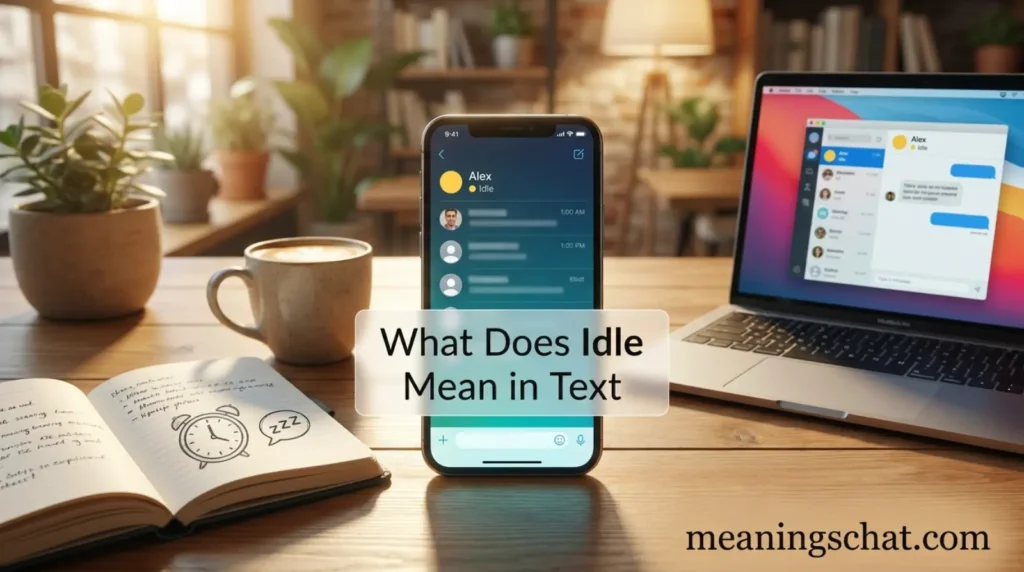
What Does Idle Mean in Text?
In text messages and online conversations, idle usually means inactive, away, not doing anything, or not responding because someone is busy or absent.
Unlike many internet abbreviations, idle is a normal English word that has become popular in digital communication. People use it to let others know they are not currently active or available.
Some common meanings include:
- Not using a device or app for a while.
- Being away from the keyboard.
- Taking a break from chatting.
- Waiting without doing anything.
- Staying online but not actively participating.
For example:
“Sorry, I was idle for an hour.”
This simply means the person wasn’t active or paying attention to their messages.
In gaming communities, idle often means a player is connected to the game but isn’t moving or playing.
Example:
“He’s idle in the lobby.”
Here, the player is online but inactive.
Sometimes people also use idle casually to describe themselves.
Example:
“I’m just sitting idle today.”
This means they aren’t busy and have nothing important to do.
Where Is Idle Used?
The word idle appears on many online platforms because it is simple and easy to understand.
Text Messages
Friends often use it when explaining why they replied late.
Example:
“I was idle after lunch, so I didn’t see your text.”
Snapchat
Snapchat users may say they were idle if they left the app open but weren’t checking messages.
Example:
“Sorry for the late reply. I was idle.”
People sometimes use idle in direct messages or comments when they haven’t been active for a while.
Example:
“I’ve been idle all day.”
TikTok
TikTok creators occasionally mention being idle when they take a break from posting content.
Example:
“I’ve been idle this week, but new videos are coming.”
Discord
Discord users frequently use idle because the app even includes an Idle status.
Someone who hasn’t used Discord for a while may automatically appear as idle.
Gaming
Gamers regularly use idle to describe players who aren’t actively playing.
Examples include:
- Idle player
- Idle account
- Idle character
- Idle farming
- Idle game
Workplace Chats
Apps like Slack or Microsoft Teams may show an idle status after someone has been inactive for several minutes.
In professional settings, idle simply indicates inactivity rather than ignoring coworkers.
Examples of Idle in Conversation
Here are some realistic chat examples.
Example 1
Emma: Where did you go?
Jake: Sorry, I was idle while eating dinner.
Example 2
Alex: Why didn’t you answer?
Chris: My phone was idle in my room.
Example 3
Mia: Want to play another game?
Ryan: Give me five minutes. I’m idle right now.
Example 4
Sarah: You disappeared!
Noah: Yeah, I went idle while studying.
Example 5
Lily: You’re still online.
Ben: My computer is on, but I’m idle.
Example 6
Emily: Are you joining us?
David: Not yet. I’m still idle after work.
Example 7
Olivia: Why is your Discord status idle?
James: I stepped away from my desk.
These examples show that idle usually explains someone’s inactivity instead of expressing an emotion.
When to Use and When Not to Use Idle
Knowing the right situation makes your conversations sound more natural.
Use Idle When
You’re online but not actively chatting.
You are taking a short break.
You want to explain a delayed response.
Avoid Using Idle When
You need a more specific explanation.
Instead of saying:
“I was idle.”
A professional message could say:
“I was away from my desk.”
or
“I was unavailable.”
These sound clearer and more appropriate in formal communication.
Is Idle Friendly, Casual, Professional, or Flirty?
Friendly
Yes.
Friends commonly use idle while chatting online.
Example:
“I was idle after school.”
Casual
Definitely.
This is the most common way people use it.
Professional
Sometimes.
Many workplace apps automatically display an idle status.
Still, in formal writing, saying away, busy, or unavailable often sounds more professional.
Flirty
Not usually.
Idle itself isn’t romantic.
However, someone might use it while chatting with a crush.
Example:
“I’ve been idle all day. Glad you’re finally here.”
In this case, the sentence becomes sweet because of the context, not because the word idle is flirty.
Does Idle Have Different Meanings?
Yes.
Depending on the situation, idle can have several meanings.
In Texting
Inactive or away.
In Gaming
A player isn’t moving or participating.
In Technology
A device is powered on but not actively working.
In Daily English
Someone has no work or activity.
Although the meanings differ slightly, they all relate to being inactive.
Why Do People Say Idle Instead of Away?
Many apps automatically use the word idle for inactive users.
As a result, people naturally started using it in conversations.
For example:
- Discord shows Idle.
- Games display idle players.
- Messaging apps may show idle status.
Because users see the word every day, it has become part of internet vocabulary.
Similar Slang Words or Alternatives
Here are several related internet terms.
AFK
Away From Keyboard.
Used mostly by gamers and Discord users.
Example:
“AFK for five minutes.”
BRB
Be Right Back.
Means someone will return soon.
Example:
“BRB, dinner is ready.”
GTG
Got To Go.
Shows someone is leaving the conversation.
Example:
“GTG. Talk later.”
Offline
Means someone is no longer connected.
Example:
“She went offline.”
Busy
Indicates someone cannot respond because they’re occupied.
Example:
“I’m busy right now.”
Although these expressions have similar meanings, each fits slightly different situations.
Is Idle Popular in 2025?
Yes.
Idle continues to be widely used because it isn’t tied to a specific trend or generation.
Gamers, students, office workers, and social media users all understand what it means.
Its popularity also comes from apps and games that automatically display an idle status, keeping the word familiar to millions of users.
Common Mistakes When Using Idle
Many beginners misunderstand the word.
Here are a few mistakes to avoid.
Thinking Idle Means Offline
Not always.
Someone can be idle while still connected.
Assuming Someone Is Ignoring You
Idle doesn’t necessarily mean they are avoiding messages.
They may simply be away.
Using Idle in Every Situation
Sometimes words like busy, away, or offline describe the situation better.
FAQs
What does idle mean from a girl?
It usually means she was inactive, away from her phone, or not checking messages. The meaning doesn’t change based on who sends it.
Is idle slang rude?
No. Idle is a polite and neutral word. It doesn’t insult anyone or contain offensive language.
Can I use idle in professional chats?
Yes, especially if your workplace chat shows an idle status automatically. In formal emails, phrases like “away from my desk” or “currently unavailable” sound more professional.
Does idle have any flirty meaning?
No. Idle has no romantic meaning by itself. Any flirting comes from the rest of the conversation.
Is idle still popular in 2025?
Yes. It’s still widely used in texting, gaming, Discord, social media, and workplace messaging apps because it clearly describes someone who is inactive or temporarily away.
Conclusion
The idle meaning in text is simple: someone is inactive, away, or not currently participating in a conversation or activity. You’ll commonly see it in texting, Discord, gaming, Snapchat, Instagram, TikTok, and workplace chat apps. It has a friendly and casual tone, making it suitable for everyday conversations but less appropriate for formal emails. Once you understand its meaning, you’ll recognize it instantly and can use it naturally whenever you need to explain that you’ve been away or inactive online.