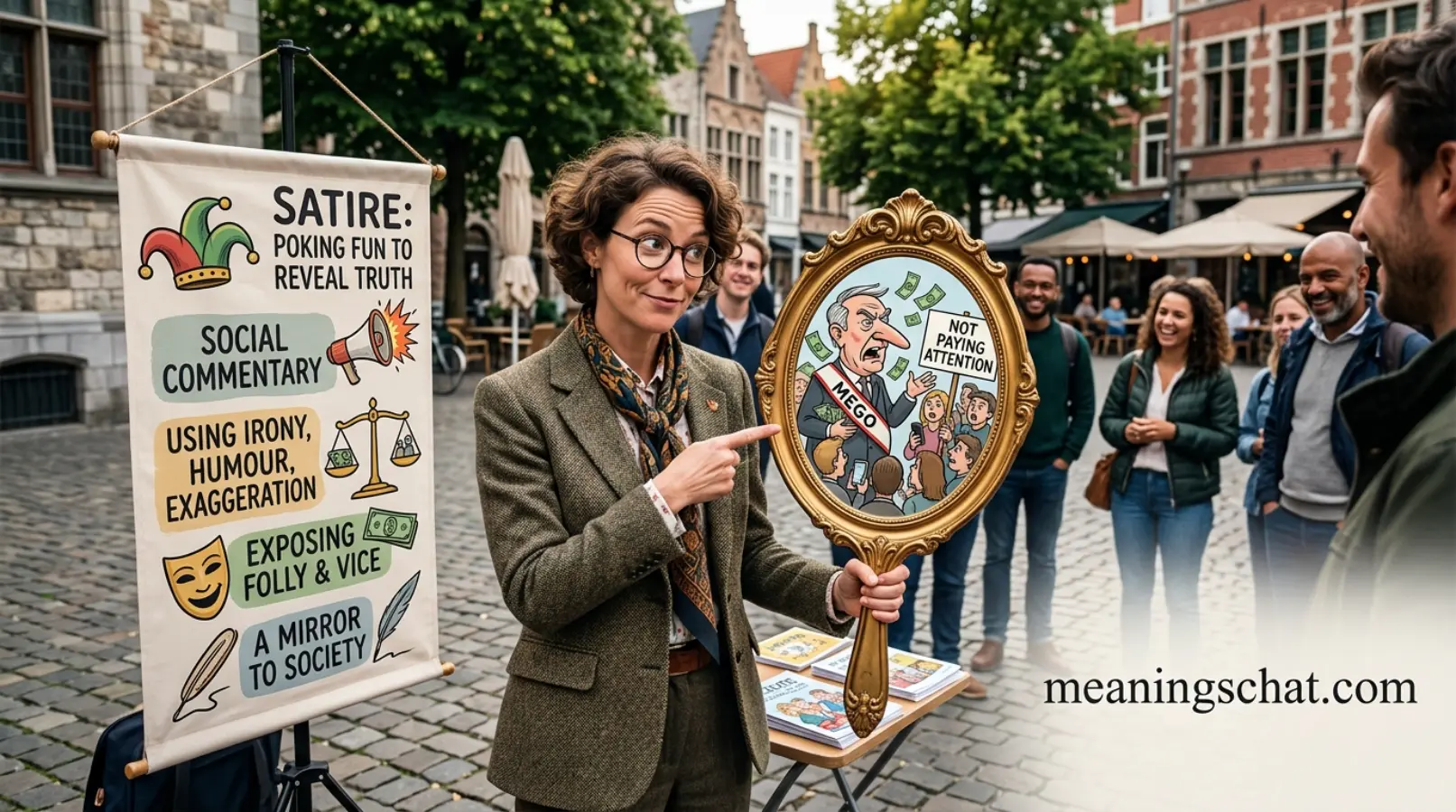
Have you ever been scrolling through social media and seen someone comment, “Relax, it’s satire,” after a post sparked a heated debate? If you’re like many people, you may have paused and wondered what that actually means.
At first glance, it can be confusing because satire often looks serious even when it’s meant as a joke. The internet is full of funny posts, memes, and videos that use satire to make a point. Once you understand how it works, you’ll spot it everywhere. In this guide, you’ll learn the satire meaning, where it’s commonly used, real-life examples, and when you should or shouldn’t use satire in conversations.
What Does Satire Mean in Text?
The satire meaning is a style of humor that uses irony, exaggeration, sarcasm, or wit to criticize or make fun of people, ideas, behaviors, or social issues.
Unlike internet abbreviations such as “LOL” or “BRB,” satire is not a text acronym or slang abbreviation. Instead, it is a writing or speaking style that appears in text messages, memes, tweets, social media posts, articles, and videos.
When someone says:
- “That’s satire.”
- “This post is satire.”
- “It’s a satirical joke.”
They mean the content is intentionally exaggerated or ironic and shouldn’t be taken literally.
Simple Definition
Satire means using humor to point out problems, mistakes, or ridiculous behavior.
Many satirical posts pretend to be serious while secretly making fun of something.
Different Ways People Use “Satire”
Depending on the situation, satire may refer to:
- A funny meme with a hidden message
- A fake news headline created for humor
- A sarcastic social media post
- A parody of celebrities or politicians
- A joke about everyday life
The goal is usually to entertain while making people think.

Where Is Satire Used?
Today, satire appears almost everywhere online. Since humor spreads quickly on social media, satirical content often goes viral.
Some of the most common places include:
Text Messages
Friends sometimes send satirical jokes or screenshots to make each other laugh.
Example:
Friend: “Apparently drinking coffee makes you immortal.”
Friend: “That’s satire.”
Funny reels and captions often exaggerate everyday situations for comedic effect.
TikTok
Creators make satirical videos pretending to believe ridiculous ideas just to expose how silly they are.
X (Twitter)
Short sarcastic posts frequently use satire to comment on trending news or social issues.
Many communities share satirical stories that intentionally sound believable.
Satirical pages post fake headlines purely for entertainment.
YouTube
Comedy channels create satirical sketches about modern life, technology, school, work, or relationships.
Is Satire Popular Among Certain Groups?
Yes. Satire is especially popular among:
- Teenagers
- College students
- Meme creators
- Comedy writers
- Social media users
- Content creators
- Political commentators
However, people of all ages enjoy satire once they understand the joke.
Examples of Satire in Conversation
Here are some natural examples of how people mention satire in chats.
Example 1
Alex: Did you really believe cats are running the government?
Emma: Wait…they aren’t?
Alex: 😂 It was satire.
Example 2
Sam: This article says homework should last 15 hours daily.
Liam: That’s definitely satire.
Example 3
Taylor: I thought the video was serious.
Jordan: Nope. It’s satirical comedy.
Example 4
Chris: Everyone online is arguing about that meme.
Olivia: They missed that it’s satire.
Example 5
Mia: I laughed so hard at that fake news headline.
Sophia: Good satire always looks believable.
Example 6
Ryan: That creator always uses satire.
Jake: Makes sense now!
Example 7
Ella: People actually got offended.
Grace: They didn’t realize it was satire.
When to Use and When Not To Use Satire
Understanding the right situation is just as important as understanding the joke itself.
When Satire Works Well
Satire fits well when:
- You’re joking with friends.
- You’re creating humorous content.
- You’re commenting on social issues.
- You’re making fun of everyday problems.
- Your audience understands sarcasm.
It can make conversations more entertaining while encouraging people to think differently.
When You Should Avoid Satire
Satire may not be a good choice when:
- Talking about sensitive topics.
- Speaking with someone who doesn’t know your humor.
- Writing school assignments unless requested.
- Sending professional emails.
- Communicating at work.
- Discussing serious emergencies.
Because satire often sounds serious, misunderstandings happen easily.
Is Satire Friendly or Rude?
Satire isn’t automatically rude.
It depends on:
- Your tone
- Your audience
- The topic
- Whether people understand the joke
Good satire makes people laugh while encouraging thoughtful discussion. Poorly written satire may confuse or offend readers.
How to Recognize Satire Online
Since many satirical posts look realistic, it’s helpful to know the warning signs.
Look for these clues:
- Extreme exaggeration
- Impossible situations
- Obvious irony
- Ridiculous claims
- Humorous tone
- Fake headlines
- Over-the-top opinions
If something sounds unbelievable but people are laughing about it, there’s a good chance it’s satire.
Why Do People Use Satire?
People use satire for many reasons.
To Entertain
Humor makes difficult topics easier to discuss.
To Criticize
Satire points out flaws in society without directly attacking people.
To Raise Awareness
Funny content often spreads faster than serious discussions.
To Start Conversations
Many satirical posts encourage readers to think about real-world problems.
To Challenge Opinions
Sometimes satire encourages people to question common beliefs.
Is Satire the Same as Sarcasm?
No. Although they’re related, they aren’t identical.
Satire
- Targets society, behavior, or ideas
- Often has a deeper message
- Can be written, spoken, or acted out
Example:
“Breaking News: Students demand weekends be extended to five days.”
Sarcasm
- Usually directed at one person
- Expresses the opposite of what someone means
- Often used in everyday conversation
Example:
“Oh great, another math test. Exactly what I wanted.”
In short:
All satire may include sarcasm, but not all sarcasm is satire.
Is Satire Always Funny?
Not necessarily.
Some satirical content is hilarious.
Other satire feels clever rather than laugh-out-loud funny.
Sometimes readers don’t even realize something is satire until someone explains it.
That’s why comments like:
- “It’s satire.”
- “This is satirical.”
- “Don’t take it literally.”
are so common online.
Similar Words or Alternatives
Here are a few words related to satire.
Sarcasm
Using words that mean the opposite of what you actually think.
Irony
When reality is different from what people expect.
Parody
A humorous imitation of a person, movie, song, or event.
Spoof
A playful or silly imitation designed to make people laugh.
Mockery
Making fun of someone or something, often through humor.
Although these words are similar, each has its own style and purpose.
Why Is Satire Sometimes Misunderstood?
Satire relies on context.
Without hearing someone’s voice or seeing facial expressions, readers may think the message is serious.
Common reasons people misunderstand satire include:
- Reading too quickly
- Missing the joke
- Not knowing current events
- Different cultural backgrounds
- Lack of context
This is why many creators eventually explain:
“Guys…it’s satire.”
FAQs
What does satire mean from a girl?
It means the same thing regardless of who says it. If a girl says something is satire, she means it’s intended as humorous or ironic rather than serious.
Is satire slang?
No. Satire is not slang or a texting abbreviation. It is a style of humor and storytelling used in conversations, writing, memes, and social media.
Is satire rude?
Not necessarily. Satire can be funny and clever, but if people misunderstand the joke or the topic is sensitive, it may come across as offensive.
Can I use satire in professional chats?
Usually, no. Professional communication should be clear and direct. Satire can easily be misunderstood in workplace conversations or formal emails.
Does satire have a flirty meaning?
No. Satire has no romantic or flirty meaning. It simply refers to humorous content that uses irony or exaggeration to make a point.
Is satire still popular in 2025?
Yes. Satire remains extremely popular across TikTok, Instagram, X, Reddit, YouTube, memes, and online comedy because it helps people discuss serious topics in a humorous way.
Conclusion
Understanding the satire meaning makes it much easier to enjoy jokes, memes, and social media posts without taking everything literally. Satire is a humorous way of using irony, exaggeration, and wit to criticize ideas, behaviors, or situations while entertaining the audience. Although it isn’t a texting abbreviation or internet slang, you’ll often see people describe posts, videos, and comments as “satire” online. The next time someone says, “It’s satire,” you’ll know they’re telling you the content isn’t meant to be taken at face value. Recognizing satire will help you better understand online humor and join conversations with confidence.

William Jones is a dedicated writer at Meaningschat who specializes in explaining text slang, abbreviations, and online language trends. He enjoys creating simple, engaging, and reader-friendly content that helps people understand modern digital communication with ease. His writing style is clear, conversational, and informative, making complex internet terms easy for everyone to follow. In his free time, William loves exploring social media trends, reading about digital culture, and discovering how online language continues to evolve.