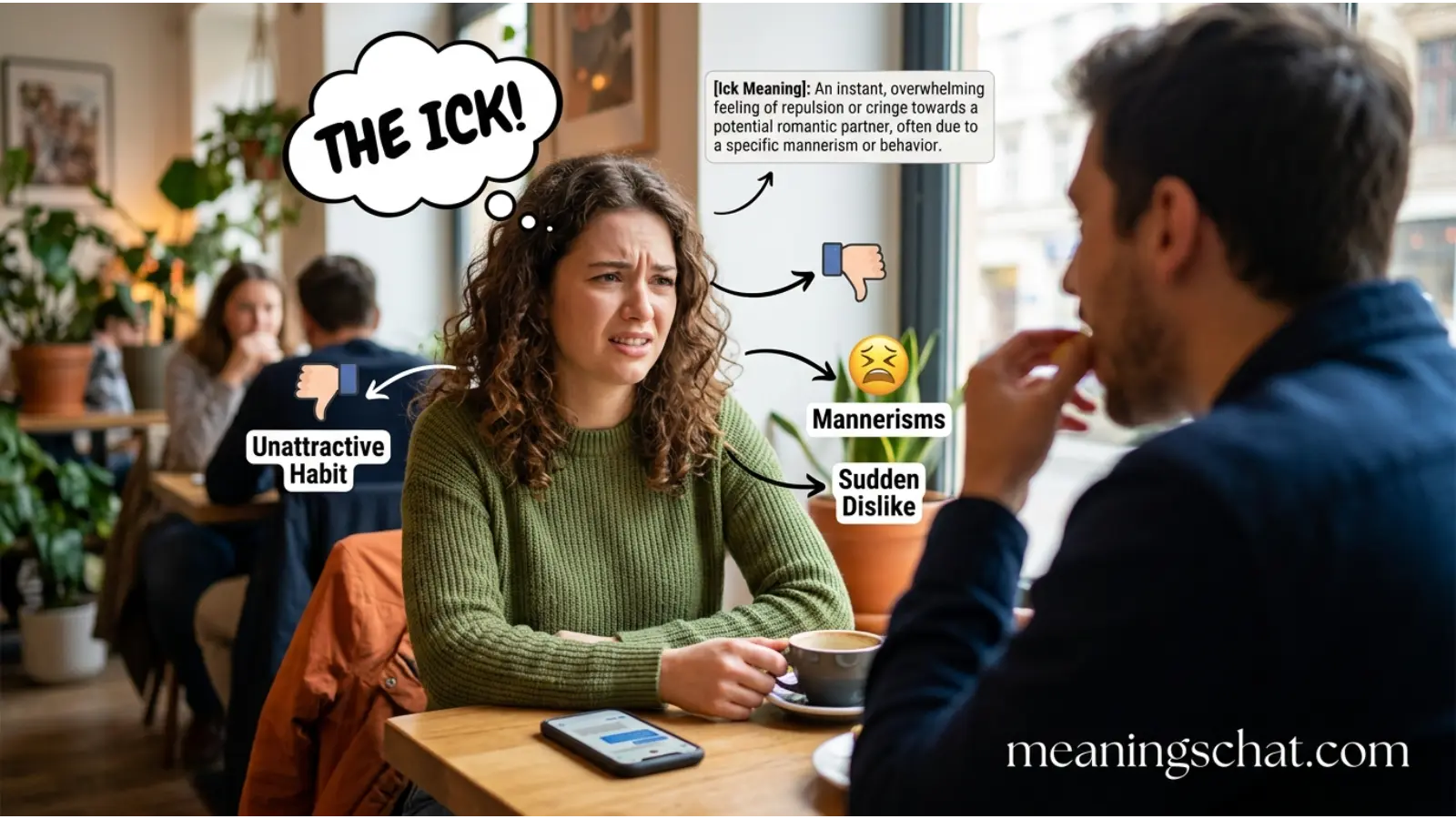
ick meaning is a common search for people who see this slang online, in texts, or on social media and wonder what someone means by saying, “That gave me the ick.” The word has become especially popular in dating conversations, memes, TikTok posts, and casual chats.
The ick describes a sudden feeling of dislike, discomfort, or loss of attraction toward someone or something. It can happen because of a small habit, behavior, comment, or moment that suddenly changes how you see a person. Sometimes the reason feels serious, while other times it can seem surprisingly silly.
People often use the word because it explains an awkward emotional reaction in a short and memorable way.
Quick Answer:
The ick is a sudden feeling of disgust, annoyance, embarrassment, or loss of attraction toward someone. In texting, “I got the ick” usually means something about a person suddenly turned you off.
What Does Ick Mean in Text?
When someone uses ick meaning slang in a text, they usually describe a sudden negative reaction to a person or behavior.
For example:
“He called his mom ‘mommy’ on our date. I got the ick.”
The speaker does not necessarily mean that the person did something objectively wrong. Instead, that particular action made the speaker feel less attracted or interested.
The word can also describe reactions outside dating. Someone might say:
“That sound gives me the ick.”
Here, ick simply expresses a strong feeling of discomfort or disgust.
In everyday texting, the meaning depends heavily on context. It can describe:
- Loss of romantic attraction
- Discomfort
- Disgust
- Embarrassment
- Annoyance
- A sudden negative impression
- A strange or awkward feeling
Ick Full Form and Definition
People sometimes search for the ick full form, but ick is not an acronym. It does not have a traditional full form like LOL or BRB.
Instead, “ick” is an informal slang expression that represents a feeling of disgust, discomfort, or sudden loss of attraction.
The expression “the ick” became especially popular in modern dating culture. Someone may feel attracted to another person and then suddenly lose that attraction after noticing a particular behavior.
For example:
“I really liked him until he started being rude to the waiter. Instant ick.”
The word can also function as an adjective-like expression in casual speech:
“That was so ick.”
In this form, the speaker means something felt unpleasant, embarrassing, or off-putting.
What Does Ick Stand For?
If you are asking what does ick stand for, the answer is simple: it does not stand for a specific phrase.
“Ick” is a slang expression rather than an abbreviation. It communicates an emotional reaction, usually involving dislike, discomfort, or reduced attraction.
Its meaning can change slightly depending on the situation. In dating, it often means a sudden turn-off. In other conversations, it can simply mean something feels gross or unpleasant.
Is Ick Rude, Offensive, or Neutral?
The word ick is generally considered casual and relatively mild. It is not normally a swear word or an offensive term.
However, the way you use it can affect how someone feels.
Saying:
“That movie gave me the ick.”
is harmless and expresses a personal reaction.
Saying:
“You give me the ick.”
directly to someone can sound hurtful or insulting because it tells them that something about their behavior makes you uncomfortable or unattracted.
So, ick is usually neutral in meaning but can sound rude when directed at a person.
Where Is Ick Commonly Used?
You will most often see ick in informal digital communication.
Common places include:
- Text messages
- TikTok
- Snapchat
- X
- Dating apps
- Group chats
- Memes
- Casual conversations
The term appears frequently in conversations about relationships and dating. People also create lists of their “icks,” describing small behaviors that instantly reduce their attraction to someone.
For example:
“My biggest ick is when someone is rude to service workers.”
Or:
“People who chew loudly are an instant ick for me.”
Real Life Examples of Ick
Here are some examples that show how people naturally use the word.
Friendly Example
Friend 1: “I think I like him.”
2: “Okay, tell me everything!”
1: “He sings badly but acts like he’s a professional.”
2: “That might be your ick!”
This use feels playful and conversational.
Casual Text Example
“I was interested until he started bragging about himself nonstop. Total ick.”
The speaker suddenly lost interest because of the person’s behavior.
Argumentative Example
Person 1: “Why did you stop talking to him?”
Person 2: “Because he was disrespectful.”
Person 1: “You could have just told him.”
Person 2: “I got the ick and didn’t want to continue.”
Here, the word helps explain a personal emotional reaction.
Social Media Example
“When he posts motivational quotes every five minutes… the ick 😭”
This style is common in memes and social posts. The phrase often appears with emojis to make the tone humorous.
Dating Example
“Everything was going well until he started making fun of the waiter. Immediate ick.”
Here, the behavior changes the speaker’s opinion of the person.
Gaming or Online Community Example
“The player kept trash-talking new users. Major ick.”
In this context, the word does not necessarily involve romantic attraction. It means the person’s behavior was unpleasant or off-putting.
Origin and Background of Ick
The expression “the ick” has roots in British English and older informal uses of “ick” to express disgust. However, the modern dating-related use became widely recognized through popular culture and social media.
The term received significant attention from the television series Ally McBeal, where “the ick” was used to describe a sudden feeling of revulsion toward a romantic partner. Later, social media platforms helped the phrase become part of everyday internet vocabulary.
TikTok, Instagram, dating content, and online relationship discussions pushed the expression into mainstream casual language.
Today, people use ick far beyond romantic relationships. It has become a convenient way to describe a quick emotional reaction to something unpleasant or embarrassing.
Ick vs. Similar Slang Terms
Several slang expressions can sound similar to ick, but they do not always carry the same meaning.
| Slang Term | Meaning | Common Use |
|---|---|---|
| Ick | Sudden dislike, discomfort, or loss of attraction | Dating, texting, social media |
| Turn-off | Something that reduces attraction or interest | Dating and relationships |
| Cringe | Something embarrassing, awkward, or uncomfortable | Social media and conversations |
| Gross | Something unpleasant or disgusting | General conversation |
| Nope | Strong rejection or refusal | Texting and social media |
| Red flag | A warning sign about someone’s behavior | Dating and relationships |
The main difference is that ick often describes an immediate emotional shift. A red flag, on the other hand, usually suggests a more meaningful concern about someone’s character or behavior.
For example, forgetting someone’s birthday might give you the ick, while controlling who they can talk to may be considered a red flag.
When Should You Avoid Using Ick?
Although the term is usually harmless, avoid using it in situations where it could unnecessarily hurt someone.
Consider avoiding phrases like:
“You are so ick.”
when speaking to someone directly.
Instead, explain what bothered you.
For example:
“I felt uncomfortable when you made that comment.”
This approach communicates your feelings without labeling the entire person.
You should also avoid using slang like ick in formal communication, such as:
- Job applications
- Professional emails
- Academic writing
- Business reports
- Formal presentations
The word works best in casual settings.
Polite Alternatives to Ick
If you want to express the same idea more respectfully, try:
- “That made me uncomfortable.”
- “That behavior turned me off.”
- “I didn’t feel comfortable with that.”
- “That wasn’t appealing to me.”
- “I didn’t like that behavior.”
- “It changed my impression of them.”
- “I started feeling less interested.”
These alternatives work better when discussing serious situations or communicating directly with another person.
Why Do People Use the Word Ick?
People use ick because it provides a quick way to describe a complicated emotional reaction.
Instead of explaining:
“I suddenly became less attracted to this person after seeing a behavior that I found embarrassing and unpleasant.”
someone can simply say:
“I got the ick.”
That makes the conversation faster and more relatable.
The word also has a humorous quality. People often use it when describing tiny habits that would not necessarily bother everyone.
For example:
“He runs for the bus with tiny steps. I don’t know why, but I got the ick.”
The humor comes from the fact that the trigger can be surprisingly specific.
The Impact of Ick in Communication
Slang can make communication feel more natural among friends and online communities. Words like ick help people express emotions quickly and casually.
However, slang can also create misunderstandings.
Someone unfamiliar with the term may not understand:
“That gave me the ick.”
They might interpret it as serious disgust instead of a playful comment.
Tone matters too. Adding an emoji can make the statement feel lighter:
“He started dancing in the grocery store and I got the ick 😂”
Without context, the same phrase might sound much harsher.
The best approach is to consider the audience, relationship, and situation before using slang.
Is Ick Safe for Social Media?
Yes, ick is generally safe for ordinary social media conversations. It is a mild slang expression and does not normally contain offensive language.
Still, context matters.
Posting:
“That movie gave me the ick.”
is very different from publicly targeting a real person with insulting comments.
If you use the word on social media, keep the focus on your experience rather than using it to bully, shame, or harass someone.
Common Ways to Use Ick in Texting
You may see the word used in several formats:
“I got the ick.”
This means something suddenly made you lose attraction or interest.
“That gave me the ick.”
This means a particular action or situation caused discomfort or dislike.
“Major ick.”
This emphasizes a strong negative reaction.
“Instant ick.”
This means the reaction happened immediately.
“My biggest ick is…”
This introduces a personal habit or behavior that the speaker finds unattractive or annoying.
“That’s so ick.”
This means something feels especially unpleasant, awkward, or off-putting.
FAQs:
What does ick mean in text?
In text messages, ick usually means a sudden feeling of dislike, discomfort, disgust, or loss of attraction toward someone or something.
What does ick stand for?
Ick does not stand for a specific phrase. It is informal slang rather than an acronym.
Is ick a bad word?
No. Ick is generally a mild and casual slang expression. However, telling someone directly that they give you the ick can sound insulting.
What does “I got the ick” mean?
“I got the ick” means something suddenly changed your feelings toward a person, often causing you to lose romantic attraction or interest.
Is ick only used for dating?
No. Although dating conversations popularized the term, people also use ick for foods, sounds, habits, behaviors, situations, and other things they find unpleasant.
What is the difference between ick and a red flag?
An ick usually describes a personal turn-off or sudden negative reaction. A red flag usually points to behavior that may indicate a more serious problem or concern.
Conclusion
Understanding ick meaning is simple once you know the context. In texting and social media, ick describes a sudden feeling of dislike, discomfort, disgust, embarrassment, or lost attraction. The phrase “I got the ick” commonly appears when someone notices a behavior that suddenly changes their feelings toward another person.
The ick full form does not exist because the word is not an abbreviation. It works as casual slang and appears most often in dating conversations, memes, group chats, and social media posts.
Use ick freely in relaxed conversations, but remember that tone matters. Saying it about a situation can sound playful, while saying it directly to someone can hurt their feelings. Understanding the audience and context helps you use this popular slang naturally and respectfully.