Have you ever received a message full of 😊🔥💀😂 and paused for a second, wondering what the sender actually meant? Maybe a friend sent “That’s 😂🔥” or someone replied “ok 💀” and you weren’t sure if it was funny, sarcastic, or something else entirely. You’re not alone—emoji meanings in text can feel confusing because they don’t always mean exactly what they show.
In today’s digital conversations, emojis are like a secret language. They add emotion, tone, and personality to simple words. But the tricky part is that the same emoji can mean different things depending on context. In this guide, you’ll learn the real meaning of emoji use in text, how people use them in chats, and when you should (or shouldn’t) use them confidently.
What Does emoji meaning in text Mean in Text?
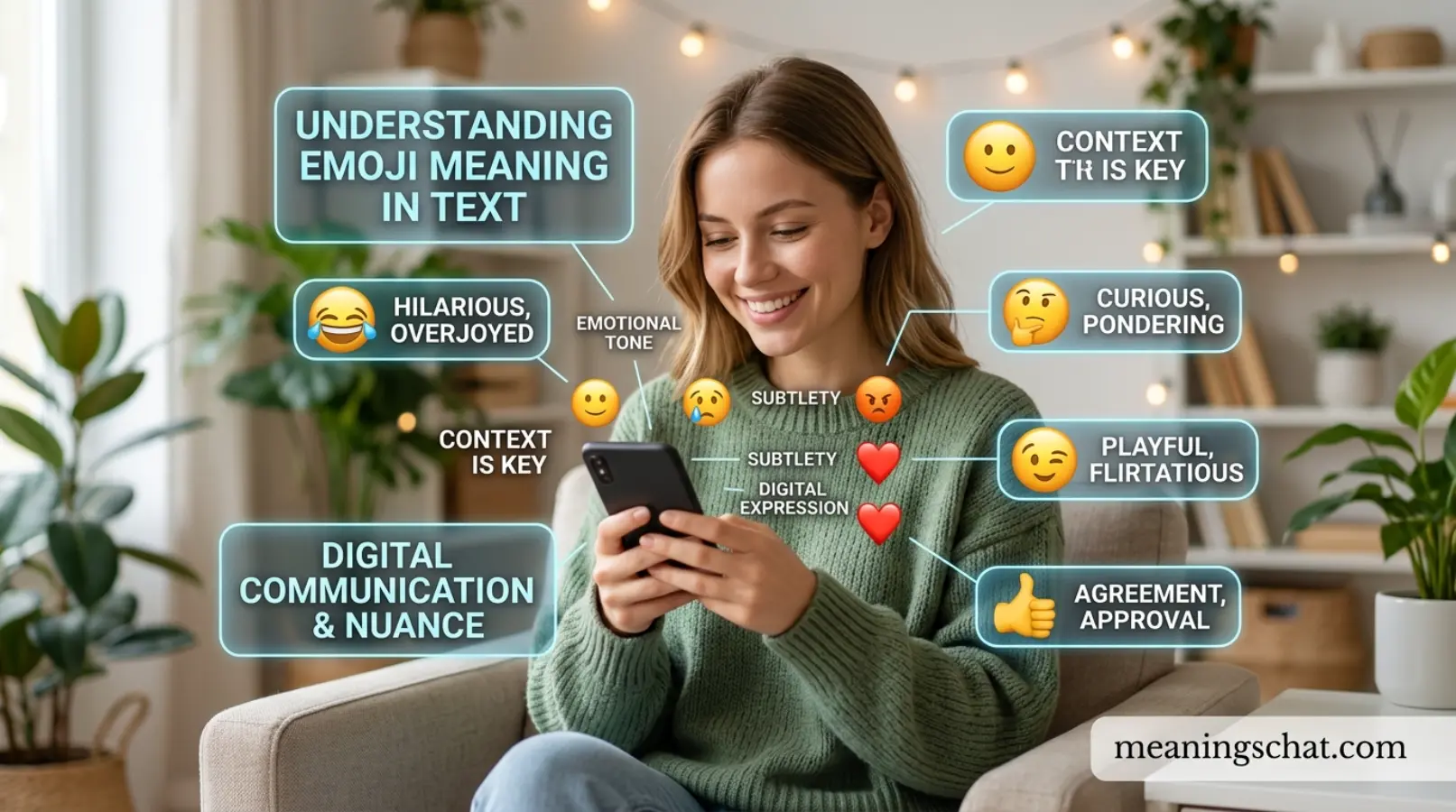
“Emoji meaning in text” refers to the interpretation of emojis when people use them in digital communication like texting, social media posts, comments, or chats. Instead of just being cute symbols, emojis act like emotional shortcuts. They help express feelings that words sometimes can’t fully capture.
For example:
- 😂 usually means laughter or something very funny
- ❤️ often represents love, care, or strong liking
- 🔥 can mean something is “cool,” “hot,” or impressive
- 💀 can mean something is extremely funny (not literal death)
However, emojis are not always fixed in meaning. Their interpretation depends heavily on context, tone, and the relationship between people chatting. The same emoji can feel friendly in one chat and sarcastic in another.
Some emojis even have multiple meanings:
- 🙃 can mean silliness, sarcasm, or passive-aggressive humor
- 😭 can mean crying, but often also “laughing hard” in slang usage
- 👀 can mean curiosity, attention, or “I’m watching this”
So, understanding emoji meaning in text is really about understanding digital emotion and context—not just symbols.
Where Is emoji meaning in text Used?
Emoji meanings are used almost everywhere people communicate online. They have become a core part of modern digital language.
1. Social Media Platforms
On Instagram, TikTok, Facebook, and X (Twitter), emojis are used in captions, comments, and replies to add emotion or humor. For example, a viral video might get comments like “🔥🔥🔥” to show it’s amazing.
2. Messaging Apps
On WhatsApp, Messenger, Snapchat, and Telegram, emojis are used in private chats to express feelings quickly without typing long sentences. A simple “ok 👍” or “thanks 😊” changes the tone of a message completely.
3. Gaming Chats
Gamers often use emojis to react quickly during gameplay chats. Emojis like 💀, 😂, or 🔥 are commonly used to react to funny or intense moments.
4. Memes and Online Culture
Memes heavily rely on emojis for exaggeration and humor. For example, 💀 is often used in memes to show something is “so funny it killed me.”
5. Teen and Youth Communication
Younger users especially rely on emojis as part of everyday language. They often mix emojis with slang to create expressive, fast communication.
In short, emojis are everywhere because they make communication faster, emotional, and more engaging.
Examples of emoji meaning in text in Conversation
Here are some real-life style chat examples showing how emojis are used:
- Funny conversation:
A: I fell asleep during class again 😂
B: Bro 💀 that’s every day now - Compliment or hype:
A: I passed the exam!
B: Let’s gooo 🔥🔥🔥 proud of you - Friendly chat:
A: Are you coming tonight?
B: Yes 👍 see you there - Flirty tone:
A: You looked good today
B: Stop it 🙈 you’re making me shy - Sarcastic reaction:
A: I studied all night and still failed
B: Amazing 🙃 just perfect - Curiosity or teasing:
A: I have a secret
B: Oh? 👀 tell me now - Emotional support:
A: I’m not feeling okay today
B: I’m here for you ❤️
These examples show that emojis can completely change the tone of a message, even if the words stay the same.
When to Use and When Not To Use emoji meaning in text
Understanding when to use emojis is just as important as knowing what they mean.
When to Use Emojis
- In casual conversations with friends or family
- On social media posts and comments
- To make messages feel friendly and warm
- To show emotion quickly without long explanations
- To add humor or sarcasm in chats
When Not to Use Emojis
- In formal emails or professional business communication
- During serious discussions (medical, legal, academic)
- When talking to someone who prefers clear, formal language
- In job applications or official documents
Tone Awareness
Some emojis can be misunderstood. For example:
- 💀 might confuse older users who don’t know modern slang meaning
- 🙃 might seem passive-aggressive instead of funny
- 😏 can look flirty or inappropriate in the wrong context
So, always consider your audience. Emojis are powerful, but context decides whether they feel friendly, funny, or confusing.
Similar Slang Words or Alternatives
Emoji meanings often work alongside text slang. Here are some related expressions:
- LOL – Laugh Out Loud (used for something funny)
- BRB – Be Right Back (temporary leave in chat)
- XD – Laughing expression (old but still used in gaming chats)
- LMAO – Laughing My A** Off (strong laughter expression)
- OMG – Oh My God (surprise or shock)
These slang terms often combine with emojis. For example:
- “LOL 😂”
- “OMG 😭”
- “BRB 👋”
Together, they create a more expressive and emotional way of texting.
FAQs
What does emoji meaning in text mean from a girl?
It depends on context. A girl using emojis like 😊❤️ may show friendliness or affection, while 😏 or 👀 could suggest teasing or interest. Always read the conversation tone.
Is emoji slang rude?
Most emojis are not rude, but some like 💀 or 🙃 can seem sarcastic depending on how they are used. Context matters a lot.
Can I use emojis in professional chats?
Yes, but only simple and safe ones like 👍 or 😊 in informal workplace chats. Avoid using expressive or unclear emojis in formal emails.
Does emoji meaning in text have flirty meaning?
Yes, some emojis like 😏😘🙈 can be used in flirty conversations, but it depends on how the person uses them.
Is emoji meaning still popular in 2025?
Yes, emojis are even more popular today. They continue to evolve with internet culture and are a major part of digital communication.
Conclusion
Emoji meaning in text is all about understanding how people express emotions beyond words. Emojis are not just decorations they are powerful communication tools that add tone, humor, and feeling to everyday chats. However, their meaning can change depending on context, culture, and relationship.
If you want to use emojis confidently, always think about who you are talking to and what emotion you want to express. With a little practice, you’ll easily understand and use emojis like a pro in any online conversation.