
You are chatting with a friend, scrolling through social media, or reading a comment online when someone says, “Let’s analyze this.” At first, you may wonder if they are using a special slang word or simply asking for a closer look. Many people search for analyze meaning because they want to understand how the word is used in everyday conversations, online discussions, and professional settings.
The good news is that analyze is not internet slang. It is a common English verb that people use both online and offline. Once you know what it means, you’ll find it much easier to understand conversations, school assignments, workplace discussions, and social media posts.
What Does Analyze Mean in Text?
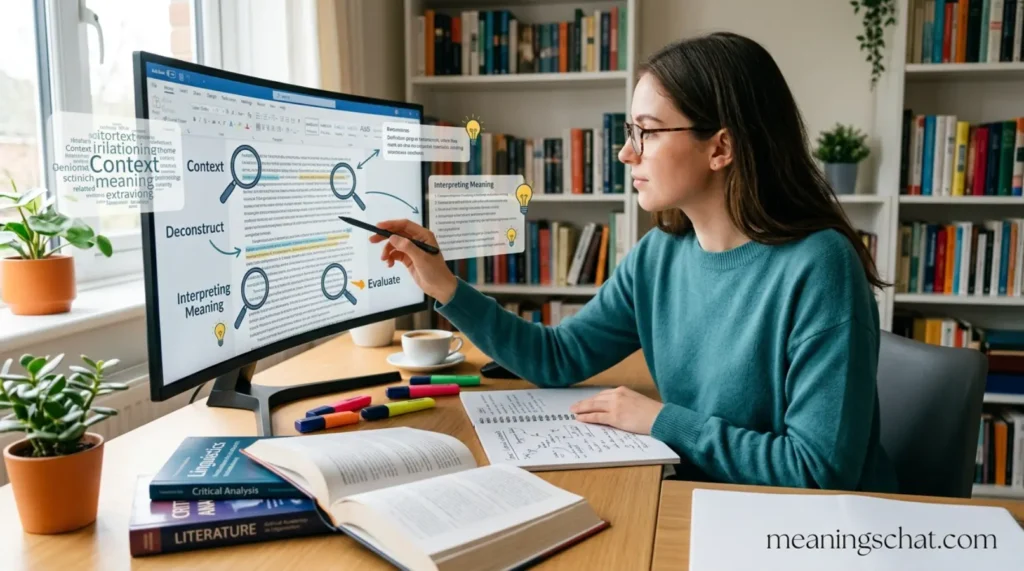
The word analyze means to examine something carefully in order to understand it better. It involves looking at details, identifying patterns, and drawing conclusions.
In text messages, online chats, and social media, people use analyze when they want to think deeply about a situation, message, video, game, or event.
For example:
- “Let’s analyze what happened.”
- “Can you analyze this screenshot?”
- “I need to analyze the results before deciding.”
Unlike many internet abbreviations, analyze is a regular English word rather than a slang term.
Simple Definition
Analyze means:
- Study something carefully.
- Break it into smaller parts.
- Understand how or why something works.
- Find patterns or important details.
Does Analyze Have Multiple Meanings?
Yes. The exact meaning depends on the situation.
Academic meaning
To examine information or data carefully.
Example:
“I need to analyze this science experiment.”
Business meaning
To review numbers, reports, or performance.
Example:
“Our team will analyze the sales report.”
Social media meaning
To think deeply about a post, trend, or conversation.
Example:
“Fans love to analyze every scene in the movie trailer.”
Personal meaning
To think carefully about someone’s behavior or feelings.
Example:
“You’re overanalyzing that text message.”
Where Is Analyze Used?
The word analyze appears almost everywhere because it is part of everyday English.
Text Messages
Friends often use it while discussing plans, relationships, or decisions.
Example:
“Let’s analyze the situation before we reply.”
People analyze captions, comments, fashion choices, and celebrity posts.
Example:
“Everyone is analyzing her latest post.”
TikTok
Creators frequently analyze viral videos, trends, and theories.
Example:
“This creator analyzes famous movie scenes.”
Snapchat
Friends may analyze conversations, snaps, or funny moments.
Example:
“Stop analyzing every snap I send.”
Discord
Gamers analyze gameplay, strategies, and updates.
Example:
“We should analyze the new game mechanics.”
Users analyze news, theories, sports, and entertainment discussions.
Example:
“This thread analyzes every detail of the episode.”
X
People analyze political news, sports results, and trending topics.
Example:
“Experts are analyzing today’s announcement.”
School
Students analyze books, poems, essays, and research.
Example:
“We have to analyze this novel.”
Workplace
Professionals analyze reports, customer feedback, and business performance.
Example:
“Our manager asked us to analyze the data.”
Examples of Analyze in Conversation
Here are realistic examples showing how people naturally use analyze.
Example 1
Alex: Did you watch the trailer?
Sam: Yes! Let’s analyze every scene.
Example 2
Emma: Why hasn’t he replied?
Lily: Don’t analyze every message. He’s probably busy.
Example 3
Jake: Can you analyze my presentation?
Ryan: Sure. I’ll give you some feedback.
Example 4
Sophia: This game feels different.
Chris: Let’s analyze the latest update.
Example 5
Mia: Everyone keeps talking about this trend.
Olivia: I want to analyze why it became so popular.
Example 6
Daniel: Did you read the report?
Sarah: Yes. I’m still analyzing the results.
Example 7
Ben: I think I made the wrong decision.
Tom: Let’s analyze what happened before blaming yourself.
When to Use and When Not To Use Analyze
Understanding the right time to use analyze helps you communicate more clearly.
Use Analyze When
You want to understand something better.
Example:
“Let’s analyze the problem.”
You are discussing facts or information.
Example:
“We should analyze the survey.”
You are reviewing data or performance.
Example:
“The company will analyze customer feedback.”
You are studying for school.
Example:
“Analyze the main character.”
You are talking about games or sports.
Example:
“Fans analyzed every goal.”
Avoid Using Analyze When
You simply mean “look.”
Instead of:
“Analyze this picture.”
You could say:
“Look at this picture.”
You want to keep the conversation casual.
Saying “analyze” can sound more serious than needed.
Instead of:
“Let’s analyze this meme.”
Friends may simply say:
“Check out this meme.”
You are writing a very formal document without context.
Use words that match the purpose of your writing.
Is Analyze Friendly, Casual, Professional, or Flirty?
Friendly
Yes.
Friends commonly use it while discussing movies, games, or life.
Example:
“Let’s analyze what happened.”
Casual
Yes.
It fits naturally into everyday conversations.
Example:
“I’m analyzing this funny video.”
Professional
Absolutely.
Analyze is one of the most common words used in business, science, education, and research.
Example:
“Our team will analyze the data.”
Flirty
Not usually.
However, people sometimes jokingly use it in dating conversations.
Example:
“Stop analyzing every emoji I send.”
In this case, the word itself is not flirty. The conversation makes it playful.
Why Do People Say “Overanalyze”?
You may also hear the word overanalyze.
Overanalyze means thinking about something too much.
Examples:
“I keep overanalyzing every text.”
“Don’t overanalyze the situation.”
This word is especially common in relationship conversations and online discussions.
Common Situations Where People Use Analyze
People use analyze in many parts of daily life.
Movies
Fans analyze hidden clues and endings.
Sports
Commentators analyze player performance.
Relationships
Friends analyze conversations and mixed signals.
Gaming
Players analyze maps, weapons, and strategies.
School
Teachers ask students to analyze literature and history.
Business
Companies analyze customer behavior.
Social Media
Users analyze trends, influencers, and viral content.
Similar Words and Alternatives
Here are some words that have similar meanings.
| Word | Meaning |
|---|---|
| Examine | Look carefully at something. |
| Study | Learn about something in detail. |
| Review | Look back over information. |
| Evaluate | Judge quality or performance. |
| Inspect | Check something closely. |
These words are often used in similar situations, although each has a slightly different meaning.
Common Mistakes People Make
Many English learners confuse analyze with similar words.
Analyze vs Look
Look means to see something.
Analyze means to think deeply about it.
Analyze vs Review
Review usually means checking something again.
Analyze means examining details to understand them.
Analyze vs Judge
Judging means forming an opinion.
Analyzing means understanding before making an opinion.
Why Is Analyze So Popular Online?
The internet encourages discussion and curiosity.
People enjoy:
- Analyzing TV shows.
- Analyzing celebrity interviews.
- Analyzing relationship advice.
- Analyzing sports performances.
- Analyzing political speeches.
- Analyzing game updates.
- Analyzing viral trends.
Content creators often build entire videos around analyzing events because audiences enjoy detailed explanations.
FAQs
What does analyze mean from a girl?
It has the same meaning regardless of who says it. It simply means examining or thinking carefully about something.
Is analyze slang?
No. Analyze is a standard English word used in everyday conversations, education, and professional settings.
Is analyze rude?
No. It is a neutral and polite word.
Can I use analyze in professional chats?
Yes. It is widely used in workplaces, business meetings, research, and emails.
Does analyze have a flirty meaning?
Not by itself. It only becomes playful if people use it jokingly in romantic conversations.
Is analyze still popular in 2025?
Yes. Analyze continues to be one of the most commonly used English words across education, business, social media, and everyday conversations.
Conclusion
The analyze meaning is simple. It means to examine something carefully so you can understand it better. Although many people search for it alongside internet slang, analyze is actually a standard English word used in texting, social media, school, work, and daily conversations.
The next time someone asks you to analyze a message, photo, game, or situation, you’ll know they simply want you to look closely, think carefully, and understand the details before reaching a conclusion.

William Jones is a dedicated writer at Meaningschat who specializes in explaining text slang, abbreviations, and online language trends. He enjoys creating simple, engaging, and reader-friendly content that helps people understand modern digital communication with ease. His writing style is clear, conversational, and informative, making complex internet terms easy for everyone to follow. In his free time, William loves exploring social media trends, reading about digital culture, and discovering how online language continues to evolve.