You’re texting someone, maybe a friend or even someone new, and you ask a simple question. A few seconds later, you get a reply: “yup.” That’s it.
No emoji, no extra words just “yup.” You pause for a moment and think, Okay… what exactly does that mean? Are they happy, bored, or just in a hurry?
If you’ve ever felt confused by short replies like this, you’re definitely not alone.
In today’s fast-moving world of texting and social media, people love using quick, simple words to communicate. “Yup” is one of those everyday slang terms that seems obvious but can actually carry different tones depending on how it’s used. I
n this guide, we’ll break down the exact meaning of “yup” in text, when to use it, and how to understand it in any conversation.
What Does “Yup” Mean in Text?
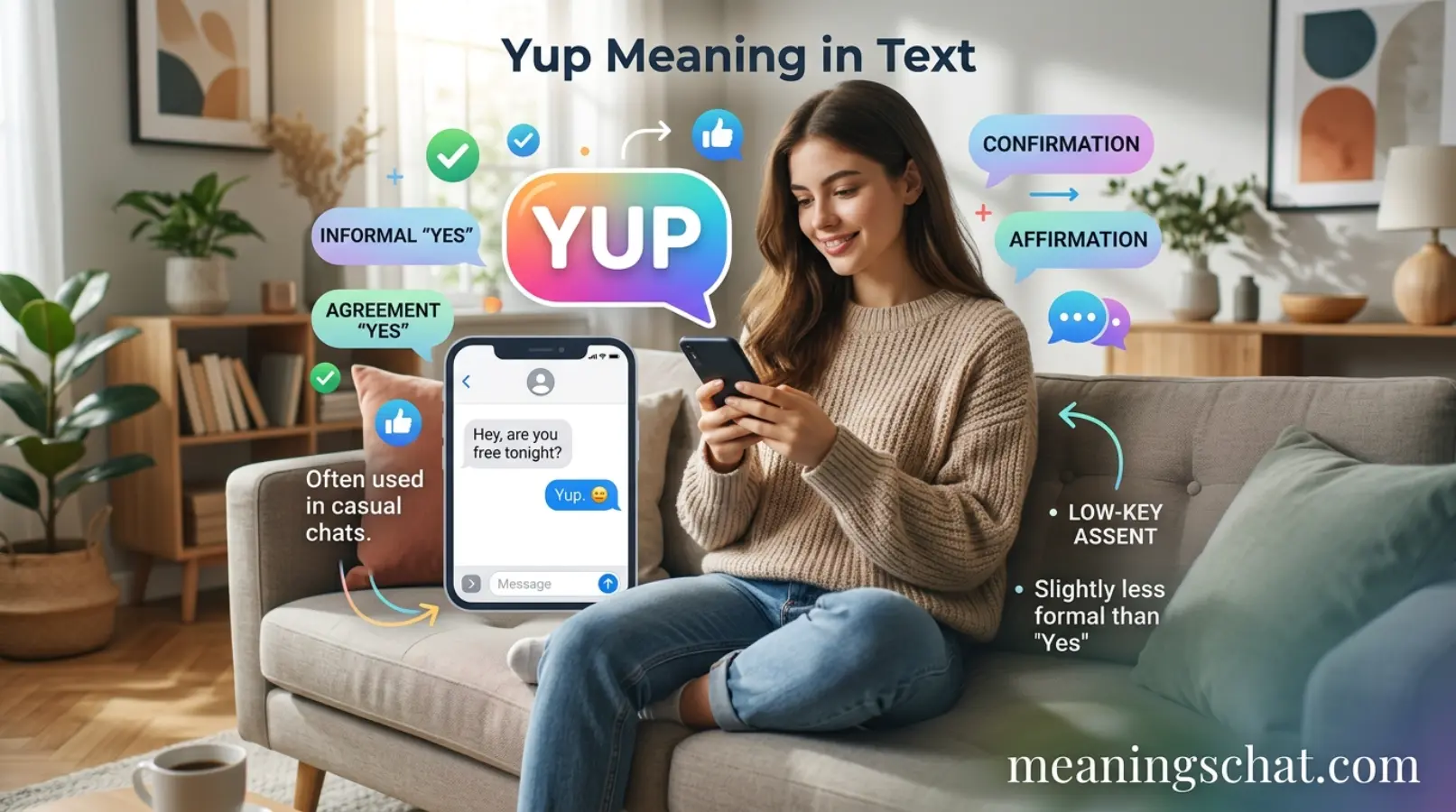
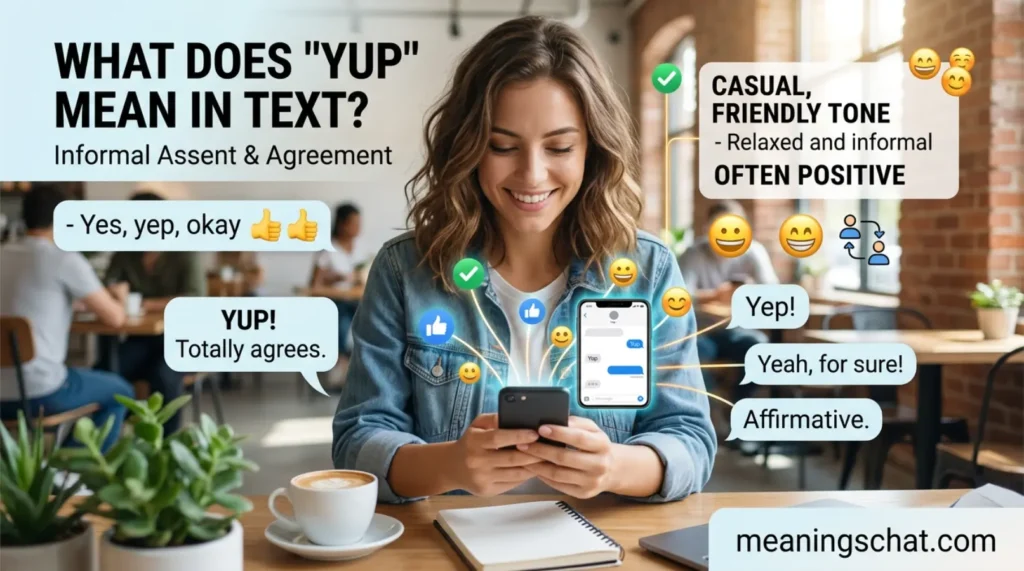
At its core, “yup” simply means “yes.” It’s an informal, relaxed, and conversational way to agree with someone or confirm something.
Basic Definition:
👉 Yup = Yes (casual and friendly)
While “yes” is the standard and more formal version, “yup” feels more natural in everyday chats. It’s the kind of word you’d use with friends, family, or anyone you’re comfortable with.
Why Do People Use “Yup” Instead of “Yes”?
There are a few reasons why “yup” is so popular:
- It’s quicker to type
- It sounds more relaxed and human
- It fits casual conversations better
- It avoids sounding too serious or formal
In texting culture, shorter and simpler is often better—and “yup” fits perfectly.
Tone and Hidden Meanings
Even though “yup” always means “yes,” the tone can change depending on how it’s written:
- Yup! → Excited, cheerful agreement
- Yup 😊 → Friendly and warm
- Yup. → Neutral or straightforward
- yup… → Bored, unsure, or slightly annoyed
- Yup yup! → Playful or energetic
So, the real meaning often depends on punctuation, emojis, and the context of the conversation.
Where Is “Yup” Used?
“Yup” is used almost everywhere in digital communication. You’ll commonly see it on:
- Text messages (SMS, WhatsApp)
- Instagram DMs
- Facebook Messenger
- Snapchat chats
- TikTok comments and replies
- Online gaming chats
It’s especially popular in fast, real-time conversations where people want to respond quickly without typing full sentences.
Who Uses “Yup”?
“Yup” is used by a wide range of people, but it’s most common among:
- Teenagers and young adults
- Friends chatting casually
- Social media users
- Gamers and online communities
That said, it’s not limited to any specific age group. Even adults use “yup” regularly in informal conversations.
Why It’s So Popular
The popularity of “yup” comes down to one simple thing: convenience. In a world where people are constantly messaging, short replies save time and effort.
Instead of typing:
👉 “Yes, I agree with you”
People prefer:
👉 “Yup”
It’s fast, easy, and gets the message across instantly.
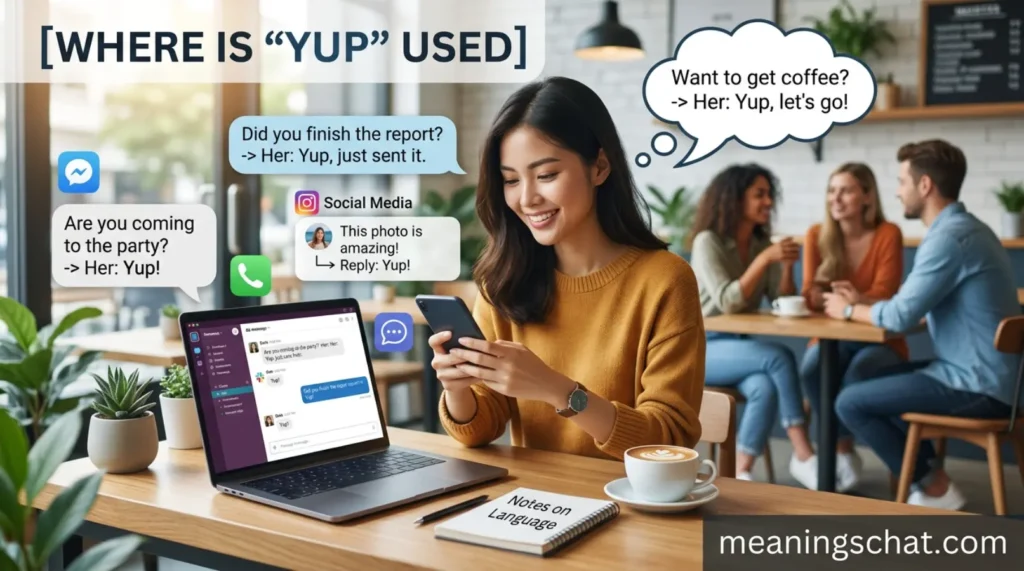
Examples of “Yup” in Conversation
To really understand how “yup” works, let’s look at some real-life chat examples:
1. Friendly Agreement
A: Want to grab coffee later?
B: Yup! Sounds good ☕
2. Quick Confirmation
A: Did you send the email?
B: Yup.
3. Slightly Bored Reply
A: Still doing homework?
B: yup…
4. Playful Tone
A: You missed me, didn’t you? 😄
B: Yup yup!
5. Flirty Conversation
A: Do you enjoy talking to me? 😉
B: Yup 😊
6. Casual Chat
A: This movie is amazing!
B: Yup, I love it
7. Busy Moment Reply
A: Can you call me tonight?
B: Yup
8. Group Chat Response
Friend 1: Let’s meet at 7
Friend 2: Yup
Friend 3: Yup 👍
These examples show that “yup” can fit into many types of conversations, from serious to playful.

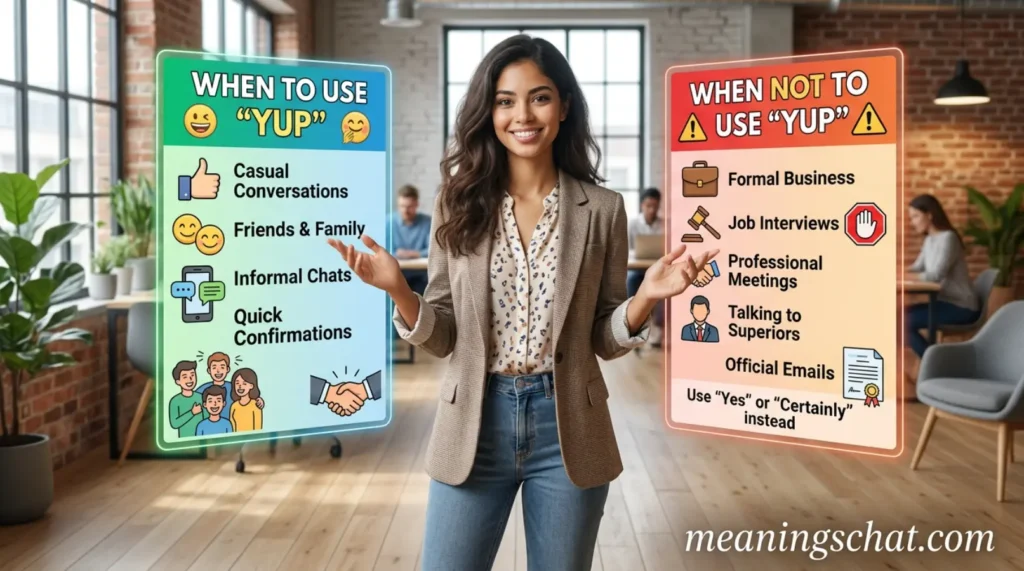
When to Use and When Not To Use “Yup”
Understanding when to use “yup” is just as important as knowing what it means.
✅ When to Use “Yup”
Use “yup” in casual and informal situations, such as:
- Talking with friends or family
- Responding quickly in chats
- Social media conversations
- Lighthearted or fun discussions
- Group chats
It’s perfect when you want to sound relaxed and natural.
❌ When NOT to Use “Yup”
Avoid using “yup” in formal or professional settings, including:
- Work emails
- Job interviews
- Business messages
- School assignments
- Professional presentations
In these situations, using “yup” may seem unprofessional or too casual.
Better Alternatives for Formal Use
Instead of “yup,” use:
- Yes
- Yes, of course
- Certainly
- I agree
These sound more polite and appropriate in formal communication.
Similar Slang Words or Alternatives
Here are some common alternatives to “yup” and how they compare:
- Yeah – Casual and widely used, slightly more neutral than “yup”
- Yep – Almost identical to “yup,” just a different style
- Yea – Informal and sometimes used in memes
- Sure – Polite and slightly more formal
- Of course – Strong and enthusiastic agreement
Quick Comparison
| Word | Tone | Usage Style |
|---|---|---|
| Yup | Casual | Friendly chats |
| Yep | Casual | Everyday texting |
| Yeah | Neutral | Common speech |
| Sure | Semi-formal | Polite replies |
| Yes | Formal | Professional use |
FAQs
What does “yup” mean from a girl?
It means “yes,” just like anyone else. The tone depends on context—it can be friendly, flirty, or neutral.
Is “yup” slang rude?
No, it’s not rude. However, very short replies like “yup” without emojis or extra words can sometimes feel cold.
Can I use “yup” in professional chats?
No, it’s best to avoid it. Use “yes” or more formal language in professional communication.
Does “yup” have a flirty meaning?
Not by itself, but it can feel flirty when used with emojis or in a playful conversation.
Is “yup” still popular in 2025?
Yes! It remains one of the most common casual replies in texting and social media.
Conclusion
“Yup” may be a small word, but it plays a big role in modern communication. It’s a quick, casual, and friendly way to say “yes,” making conversations feel more relaxed and natural.
However, the tone of “yup” can change depending on how you use it—adding emojis or punctuation can make it sound warm and engaging, while a plain “yup” might feel neutral or even slightly distant.
The key takeaway is simple:
👉 Use “yup” in casual conversations, and switch to “yes” in formal situations.
Once you understand this balance, you’ll be able to use “yup” confidently and interpret it correctly in any chat.

Jimmy Johan is a passionate writer at Meaningschat who specializes in explaining text slang, internet terms, and digital communication trends. He is known for his simple, engaging, and reader-friendly writing style that makes modern language easy to understand. Jimmy enjoys researching online culture, social media trends, and the evolving world of texting abbreviations. Through his content, he aims to help readers stay informed, connected, and confident in today’s digital conversations.