Wtv meaning in text Have you ever received a message that simply says WTV and wondered what the person meant? Texting slang can be confusing, especially when three letters replace a whole phrase. The good news is that WTV meaning in text is usually easy to understand.
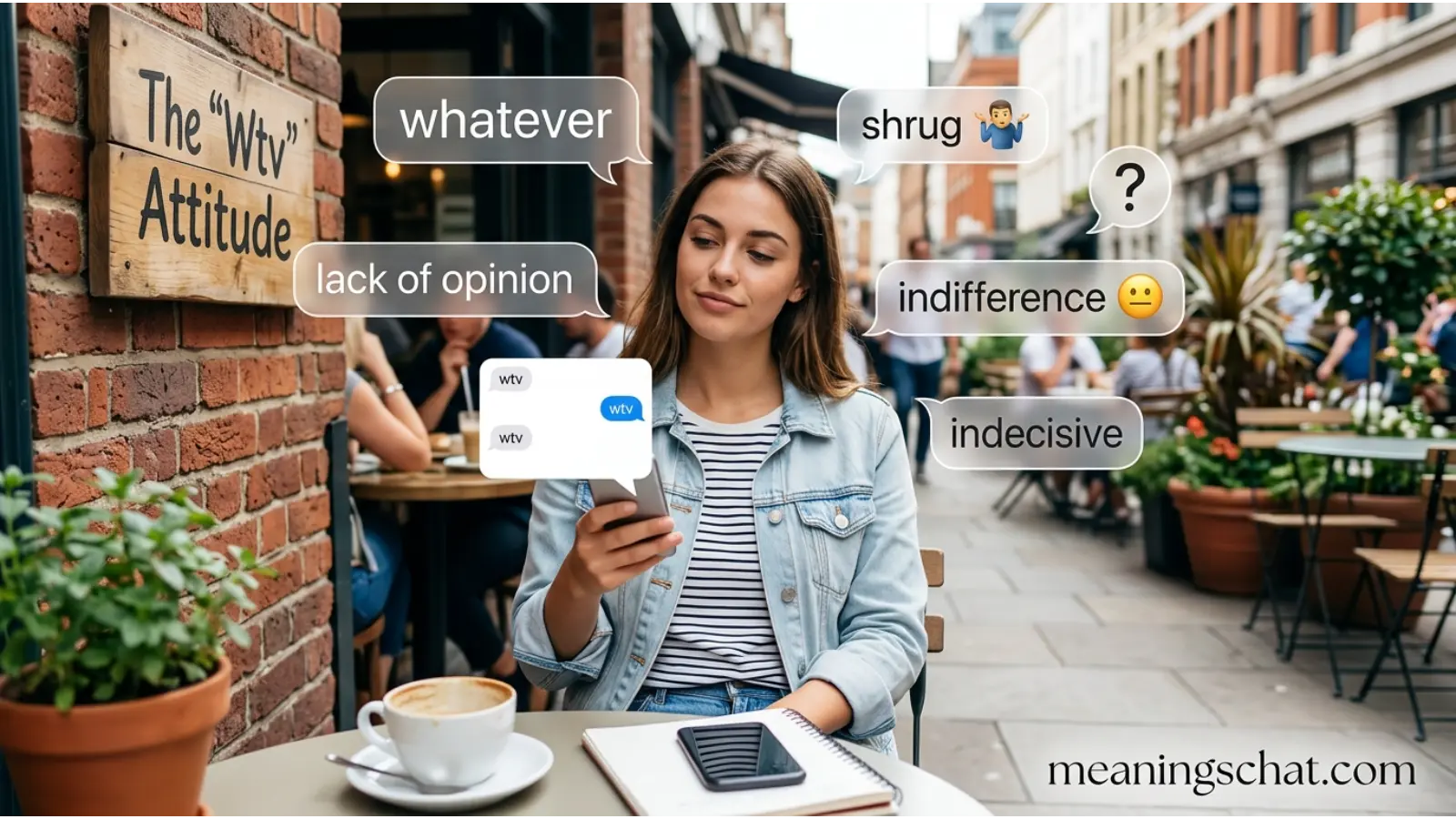
In most casual conversations, WTV means “whatever.” People use it when they do not mind which option is chosen, when they want to dismiss a minor issue, or when they simply want to keep a conversation short. You may see WTV on Snapchat, Instagram, TikTok, WhatsApp, Discord, and regular text messages.
Quick Answer:
WTV means “whatever” and is mainly used as casual internet slang.
What Does WTV Mean in Text?
WTV stands for “whatever.”
It is a shortened texting version of the word “whatever.” People use it because it is quick to type and fits naturally into casual digital conversations.
For example:
- WTV, you choose.
- I can eat wtv you want.
- WTV happens, we’ll figure it out.
- WTV, I’m not worried about it.
The exact feeling behind WTV depends on the sentence and the conversation.
Sometimes it sounds completely relaxed:
WTV you want is fine with me.
Here, the person is saying they are happy with any choice.
At other times, WTV can sound dismissive:
WTV, I don’t care anymore.
In this case, the speaker may be showing frustration or saying they do not want to continue the discussion.
Does WTV Have Other Meanings?
In ordinary texting, “whatever” is the most common meaning of WTV. However, abbreviations can have different meanings in specialized communities or specific contexts.
For everyday social media and texting, you can generally understand WTV as “whatever.”
Where Is WTV Used?
WTV is mostly found in informal online conversations. Since it is short and casual, people commonly use it when chatting with friends or posting on social platforms.
You may see WTV on:
- Snapchat
- TikTok
- Facebook Messenger
- Discord
- Text messages
- Group chats
- Gaming conversations
- Online comments
WTV is not limited to one age group. Younger internet users may use it frequently, while older users who are familiar with texting abbreviations may also recognize or use it.
The meaning stays mostly the same across these platforms, but the tone can change depending on the conversation.
For example:
WTV you want, I’m good.
This sounds easygoing.
But:
WTV. I’m done talking.
This sounds much more dismissive.
That is why context matters when interpreting WTV.
Examples of WTV in Conversation
Here are some realistic examples showing how people might use WTV in everyday chats.
Example 1: Choosing Food
Alex: Pizza or burgers?
Sam: WTV you want. I’m hungry.
Here, WTV means whatever and shows that Sam does not have a preference.
Example 2: Making Plans
Mia: Where should we go tonight?
Emma: WTV works for me.
The speaker is comfortable with any choice.
Example 3: Casual Conversation
Jake: Are you still upset about yesterday?
Ryan: WTV, it’s not a big deal anymore.
Here, WTV suggests that Ryan does not want to focus on the issue.
Example 4: Frustrated Tone
Lily: You never listen to me.
Sara: WTV.
In this situation, WTV may sound dismissive or irritated. The short reply gives very little emotional detail.
Example 5: Friendly
Chris: What gift do you want?
Dan: WTV you think I’d like 😂
Here, WTV has a relaxed and friendly tone.
Example 6: Flirty
Ava: Movie or dinner for our date?
Noah: WTV you prefer. I just want to see you 😉
WTV itself is not flirty. The romantic meaning comes from the rest of the message.
Example 7: Funny
Tom: What are you doing this weekend?
Ben: WTV involves food 😂
Here, WTV is being used playfully to avoid giving a specific answer.
When to Use and When Not to Use WTV
WTV is best for casual communication. It can save time and make a message sound relaxed, but it is not appropriate for every situation.
When WTV Works Well
You can use WTV when:
- Chatting with friends
- Messaging family members
- Talking in group chats
- Commenting casually online
- Using Snapchat or Instagram
- Talking with gaming friends
- Making informal plans
- Discussing small everyday choices
For example:
WTV you want to watch is fine with me.
This sounds natural in a casual conversation.
When to Avoid WTV
Avoid WTV when communicating in formal or professional situations.
It may be inappropriate for:
- Job applications
- Business emails
- Formal school work
- Official messages
- Customer-service communication
- Professional reports
- Important workplace conversations
Instead of:
WTV works for me.
A more professional version would be:
Any option works for me.
This makes your meaning clearer and avoids an overly casual tone.
Can WTV Sound Rude?
Sometimes.
WTV is not inherently rude, but a one-word reply can easily sound dismissive.
Compare these:
WTV you prefer is fine with me.
This sounds cooperative.
WTV.
This may sound like the person does not care or does not want to continue the conversation.
Your punctuation, surrounding words, emojis, and relationship with the other person can all affect the tone.
Is WTV Friendly, Casual, or Flirty?
Friendly
WTV can be friendly when someone is showing flexibility.
WTV place you choose is fine.
Casual
This is the most common tone of WTV. It is informal internet shorthand for “whatever.”
Rude or Dismissive
Depending on context, WTV can suggest annoyance or indifference.
WTV, do what you want.
This can sound irritated.
Flirty
WTV does not have a specific romantic or sexual meaning. It can appear in a flirty conversation, but the surrounding message creates that tone.
For example:
WTV you want, beautiful 😉
The flirtiness comes from the wording, not WTV itself.
Similar Slang Words or Alternatives
Several other abbreviations can appear in conversations where WTV is used.
IDC — I Don’t Care
I don’t care directly expresses a lack of concern or preference.
IDC where we go.
IDK — I Don’t Know
IDK means “I don’t know.”
I don’t know what happened.
NVM — Never Mind
NVM means “never mind” and is often used when someone wants to drop a topic.
Never mind , I figured it out.
TBH — To Be Honest
TBH means “to be honest.”
To be honest , I liked the first movie better.
IMO — In My Opinion
IMO means “in my opinion.”
In my opinion , that was the better choice.
These abbreviations are all common in informal digital communication, but their meanings and tones are different.
FAQs
What does WTV mean from a girl?
If a girl sends WTV, it usually means “whatever.” It does not have a special meaning simply because a girl uses it. The tone depends on the complete message and conversation.
Is WTV slang rude?
WTV is not automatically rude. However, a short response such as “WTV.” can sound dismissive, annoyed, or uninterested depending on the context.
Can I use WTV in professional chats?
It is better to avoid WTV in professional communication. Use “whatever” only when appropriate, or choose clearer wording such as “either option works for me.”
Does WTV have any flirty meaning?
No. WTV does not specifically mean anything flirty. It can appear in a romantic conversation, but the surrounding words determine whether the message is flirtatious.
Is WTV still popular in 2025?
WTV remains recognizable as casual texting shorthand, especially in social media and informal messaging. However, slang usage can vary between platforms, age groups, and online communities.
Conclusion
The WTV meaning in text is usually “whatever.” It is a short, informal abbreviation used in texts, social media, group chats, and other casual online conversations.
WTV can express flexibility, indifference, or dismissal depending on the context. For example, “WTV you want is fine” sounds relaxed, while simply saying “WTV” may sound annoyed or uninterested.
The easiest way to understand WTV is to look at the entire conversation instead of focusing on the abbreviation alone. Use it with friends and in casual chats, but choose clearer and more professional wording for work, school, and formal communication.