Have you ever been chatting with someone on WhatsApp, Instagram, or even email, and suddenly you see a message ending with “TIA”? At first, it might feel confusing—almost like a secret code. Many people pause and wonder if it’s slang, an acronym, or something technical. The truth is, “TIA” is actually very common in online communication, especially when people want to sound polite but keep their message short.
You’ll often see it in requests like asking for help, information, or favors. In this guide, we’ll break down the exact meaning of TIA in text, where it is used, real conversation examples, and when you should or shouldn’t use it so you can confidently understand and use it in chats.
What Does TIA Mean in Text?
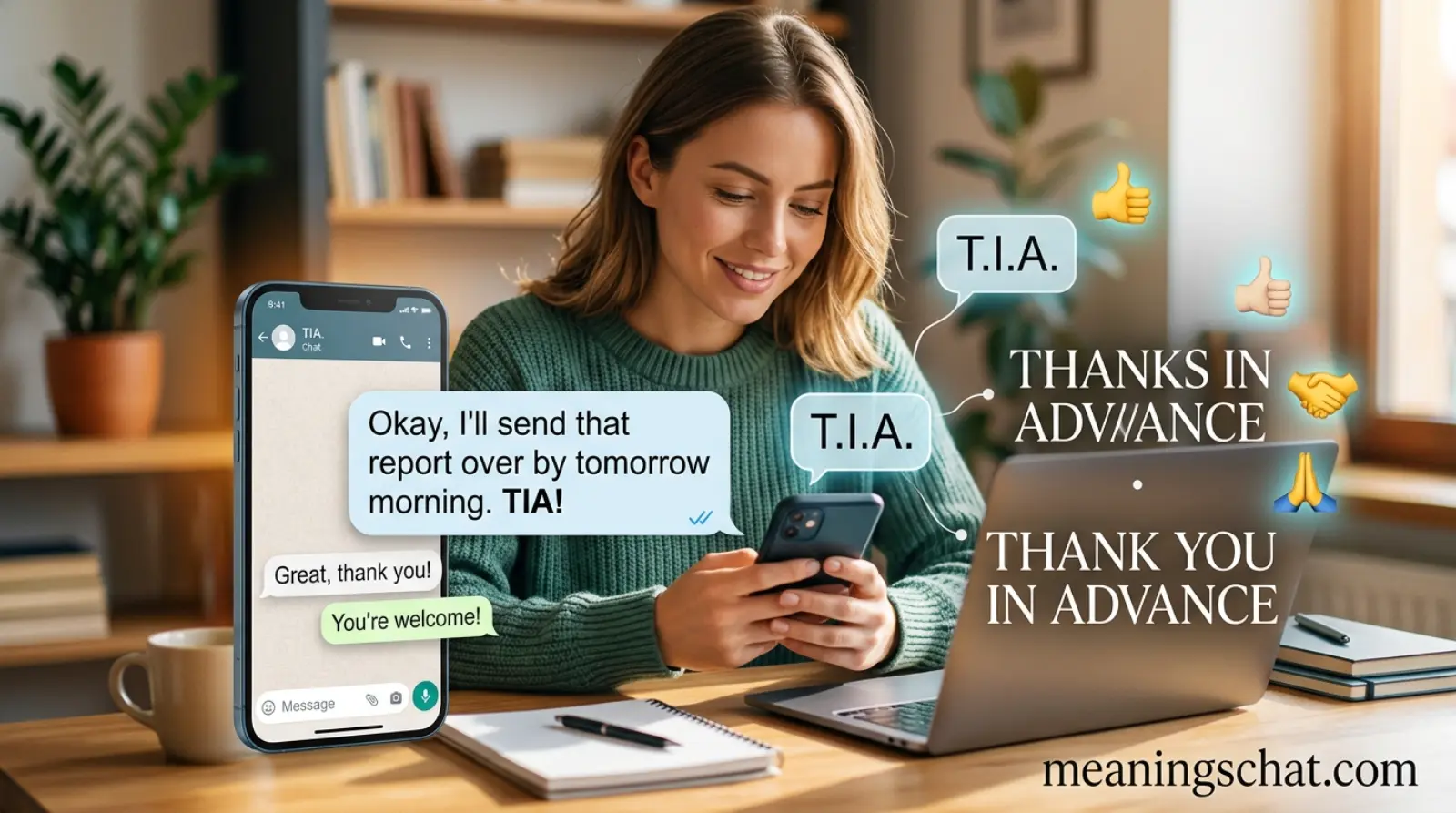
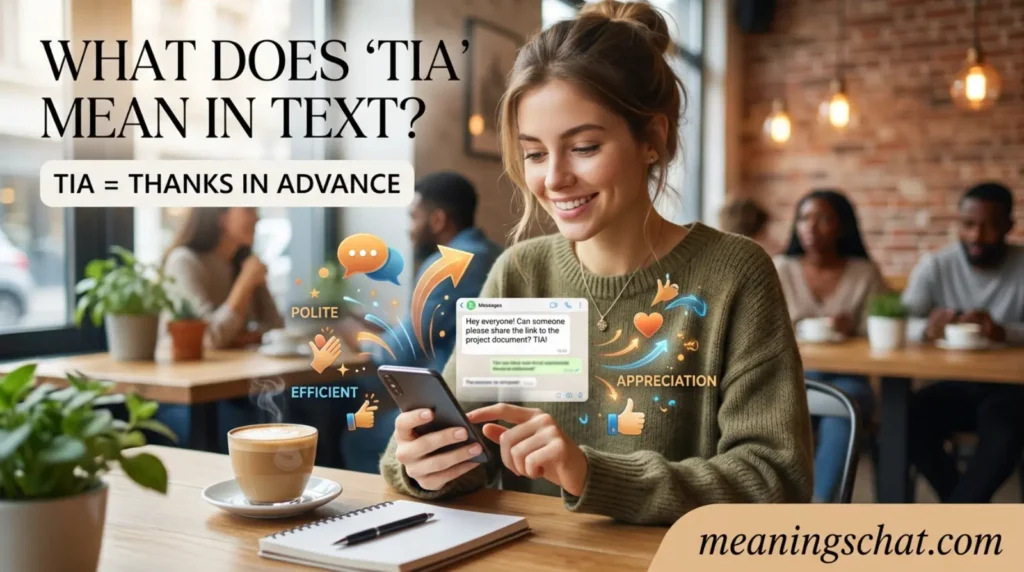
In texting and online communication, TIA stands for “Thanks In Advance.”
It is used when someone is requesting help or information and wants to thank the other person before they actually receive a response.
👉 Simple meaning:
TIA = I appreciate your help before you even give it.
So instead of writing a full sentence like:
“Thank you in advance for your help,”
people shorten it to:
“TIA”
📌 Why people use TIA:
- Saves time while typing
- Makes messages shorter and cleaner
- Sounds polite and respectful
- Common in fast-paced digital chats
⚠️ Important note:
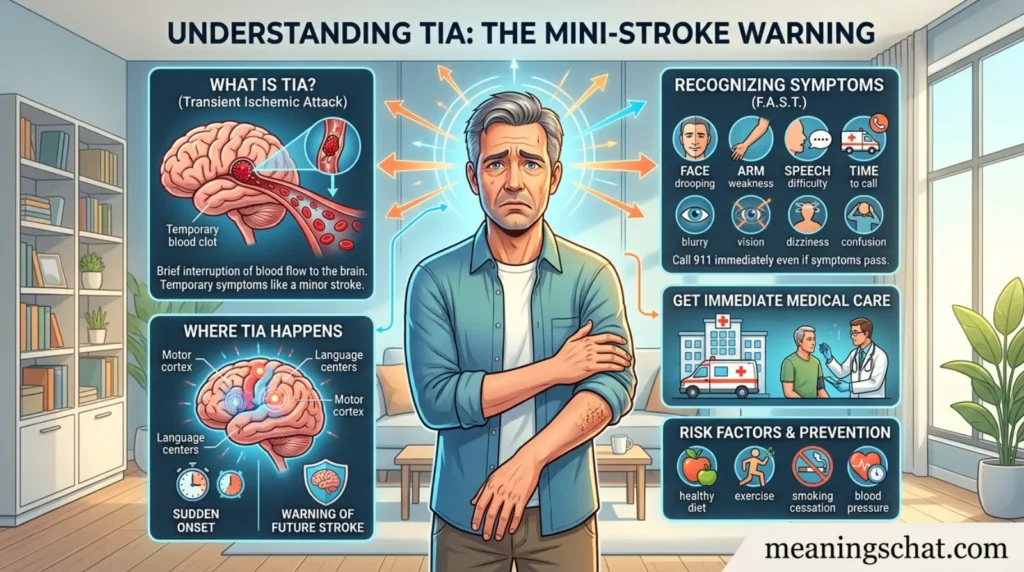
While TIA is usually “Thanks In Advance,” it can sometimes confuse beginners because it also has a medical meaning:
- TIA (Medical) = Transient Ischemic Attack (a temporary mini-stroke warning)
But don’t worry in texting, emails, and social media, it almost always means Thanks In Advance.
Where Is TIA Used?
TIA is widely used in digital communication where quick and polite messaging is important.
📱 Common platforms:
- WhatsApp chats
- Instagram DMs and comments
- Snapchat messages
- Facebook groups and posts
- Discord and gaming chats
- Reddit discussions
- Email communication (informal or semi-formal)
👥 Who uses TIA the most?
- Students asking for notes or assignments
- Office workers requesting quick updates
- Freelancers communicating with clients
- Gamers asking for help or resources
- Social media users requesting information
💡 Why it’s popular:
People prefer TIA because it is:
- Fast to type
- Universally understood in online spaces
- Polite without being too formal
- Easy to include at the end of a message
Examples of TIA in Conversation
Let’s look at real-life chat examples so you can understand how naturally TIA is used.
Friendly conversations:
- “Can you send me your notes? TIA 😊”
- “Please tell me the result when it comes out, TIA!”
- “Share the link with me, TIA bro”
Casual / social media style:
- “Drop your favorite songs, TIA 🎧”
- “Anyone knows this movie name? TIA!”
- “Help me choose a username, TIA 😄”
Flirty or playful tone:
- “Send me your best selfie, TIA 😉”
- “Pick my outfit for tomorrow, TIA ❤️”
Professional / semi-formal:
- “Kindly review the document by evening, TIA.”
- “Please confirm the meeting time, TIA.”
Group chat examples:
- “Does anyone have last week’s assignment? TIA guys!”
- “Who can share the lecture slides? TIA everyone.”
These examples show that TIA is flexible and fits many communication styles depending on tone.
When to Use and When Not to Use TIA
Understanding tone is important when using slang like TIA.
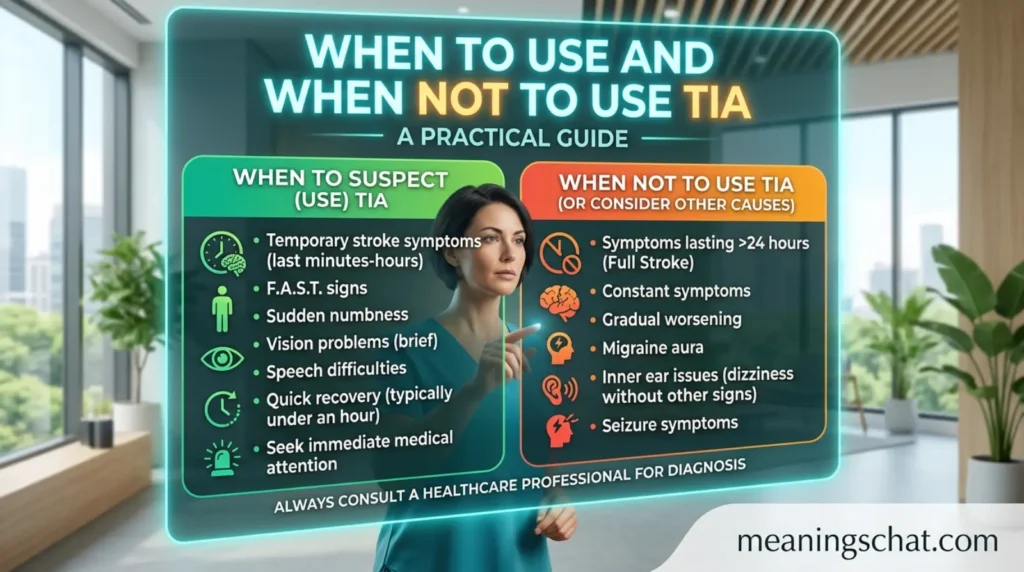
👍 When to use TIA:
- Asking for small favors
- Friendly conversations
- Informal or semi-formal emails
- Group chats and social media posts
- When you want to sound polite but brief
👎 When NOT to use TIA:
- Official business emails (especially to senior staff)
- Academic essays or assignments
- Legal documents or formal communication
- When talking to someone unfamiliar with internet slang
⚖️ Tone breakdown:
- Polite ✔️
- Friendly ✔️
- Casual ✔️
- Too informal for strict professional settings ⚠️
👉 Rule of thumb:
If the situation requires full professionalism, avoid TIA and write “Thank you in advance.”
Common Mistakes People Make with TIA
Even though TIA is simple, users sometimes misuse it. Here are common mistakes:
❌ 1. Using it in very formal emails
Example:
“Dear CEO, send report TIA.” ❌
This sounds too casual and unprofessional.
❌ 2. Using it without a request
TIA only makes sense when you are asking for something.
❌ 3. Overusing it in every message
Using TIA too often can make messages feel repetitive.
❌ 4. Confusing meaning in different contexts
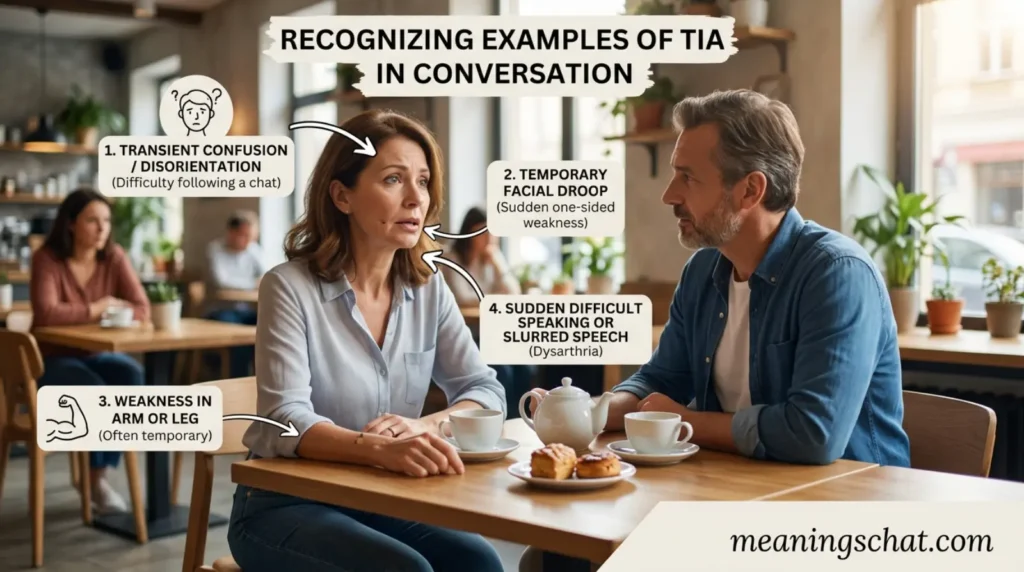
Some beginners confuse TIA with medical or technical terms.
TIA in Email Communication (Important Section)
TIA is especially common in emails, but usage depends on tone.
📧 Informal email example:
“Hi John, can you send me the updated file? TIA.”
📧 Semi-formal email example:
“Kindly review the attached proposal. TIA.”
📧 Formal alternative (better option):
Instead of TIA, you can write:
“Thank you in advance for your assistance.”
💡 Pro tip:
In corporate environments, it’s safer to avoid abbreviations unless your team commonly uses them.
History and Evolution of TIA in Online Slang
TIA became popular during the early rise of internet messaging, when people started shortening common phrases to type faster.
📈 Evolution timeline:
- Early email era: full phrase “Thank you in advance”
- Chat forums & MSN era: abbreviation TIA becomes common
- Mobile texting era: widespread use due to character limits
- Modern era (WhatsApp, Instagram): still widely used for speed and clarity
Even today, TIA remains relevant because digital communication continues to value speed and simplicity.
Similar Slang Words or Alternatives
Here are related abbreviations often used with or instead of TIA:
🔹 TY / THX – “Thank You / Thanks”
Simple expressions of gratitude.
🔹 FYI – “For Your Information”
Used to share useful information.
🔹 BRB – “Be Right Back”
Used when temporarily leaving a chat.
🔹 GTG – “Got To Go”
Used when ending a conversation.
🔹 NP – “No Problem”
Casual reply to thanks.
These terms are part of everyday internet language and often appear together in chats.
FAQs About TIA Meaning in Text
❓ What does TIA mean from a girl?
It means the same thing—“Thanks In Advance.” It is not gender-based slang.
❓ Is TIA slang rude?
No, TIA is not rude. It is actually polite because it shows appreciation in advance.
❓ Can I use TIA in professional chats?
Yes, but only in semi-formal or internal team communication. Avoid it in strict formal emails.
❓ Does TIA have a flirty meaning?
No, TIA is neutral. However, tone can feel playful depending on context.
❓ Is TIA still popular in 2025–2026?
Yes, it is still widely used in texting, emails, and social media because it is simple and efficient.
Conclusion
TIA stands for “Thanks In Advance,” and it is a widely used abbreviation in texting, social media, and email communication. It helps people express politeness quickly when requesting help or information. While it is perfect for casual and semi-formal conversations, it should be avoided in strict professional or academic writing.
The key to using TIA correctly is understanding context. If you are chatting with friends, classmates, or colleagues in a relaxed setting, TIA is a great time-saving phrase. But when professionalism matters, it’s better to write the full sentence.
With this understanding, you can now confidently recognize and use TIA in your daily online conversations without confusion.

William Jones is a dedicated writer at Meaningschat who specializes in explaining text slang, abbreviations, and online language trends. He enjoys creating simple, engaging, and reader-friendly content that helps people understand modern digital communication with ease. His writing style is clear, conversational, and informative, making complex internet terms easy for everyone to follow. In his free time, William loves exploring social media trends, reading about digital culture, and discovering how online language continues to evolve.