Have you ever come across the name Jacob in a conversation, social media profile, or baby name list and wondered what it actually means? Many people hear this popular name frequently but don’t always know the story, history, and meaning behind it. If you’re expecting a baby, researching family names, or simply curious, understanding the meaning of Jacob can be both interesting and meaningful.
The name Jacob has been used for centuries across different cultures and countries. It carries deep historical and biblical significance while remaining one of the most popular names today. In this guide, you’ll discover the Jacob name meaning, its origin, symbolism, personality traits often associated with it, and why it continues to be a favorite choice for parents worldwide.
What Does Jacob Name Meaning Mean in Text?
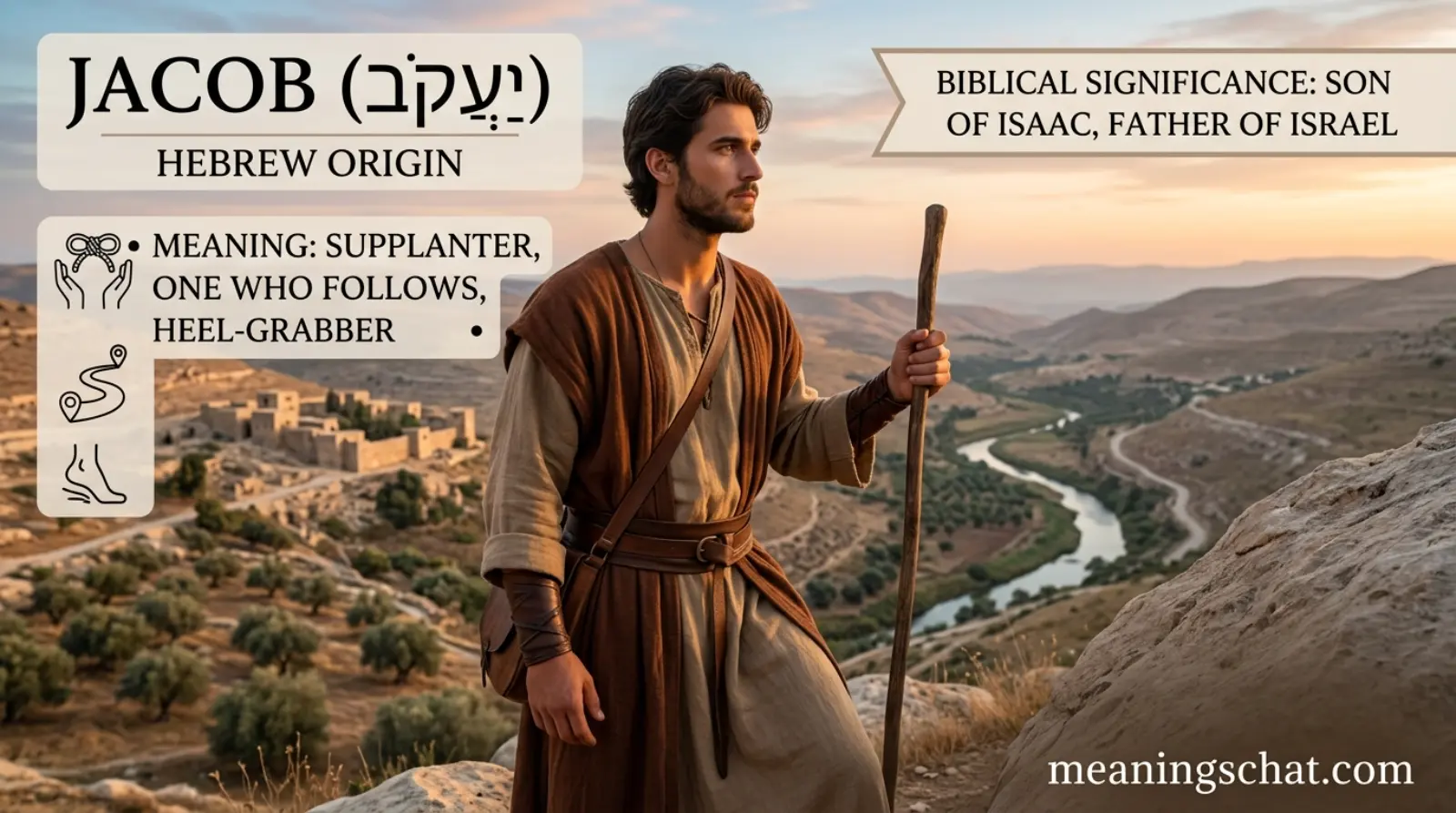
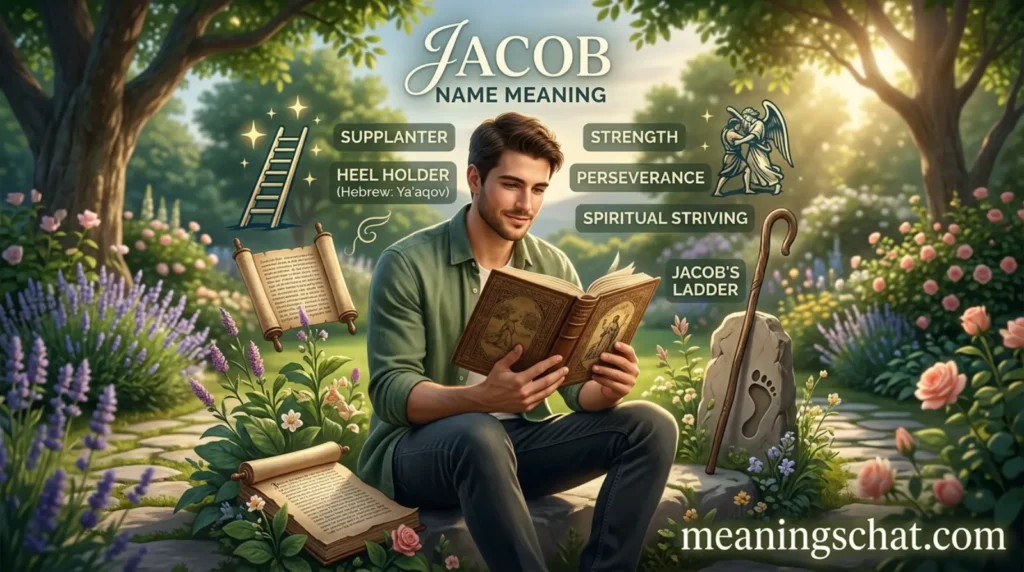
The Jacob name meaning is commonly understood as “supplanter” or “one who follows.” The name originates from the Hebrew name Ya’aqov (יַעֲקֹב).
In biblical history, Jacob was born holding the heel of his twin brother Esau. Because of this event, the name became associated with the Hebrew word meaning “heel” or “to follow after.”
Over time, the meaning evolved to include:
- Supplanter
- One who follows
- Heel holder
- Successor
- Someone who takes another’s place
Although the literal meaning may sound unusual today, many people view Jacob as a symbol of determination, perseverance, and leadership.
Origin of the Name Jacob
The name Jacob has Hebrew roots and became widely known through the Bible. It later spread throughout Europe and the rest of the world.
Origin details:
- Language: Hebrew
- Original Form: Ya’aqov
- Gender: Traditionally male
- Meaning: Supplanter, heel holder, one who follows
- Religious Connection: Strong biblical significance
Today, Jacob remains a popular name in English-speaking countries and many other regions worldwide.
Where Is Jacob Used?
Unlike internet slang or abbreviations, Jacob is a traditional personal name rather than a texting acronym. However, it appears frequently across many contexts.
Common Places Where You See the Name Jacob
Social Media
You may see Jacob used in:
- Instagram usernames
- TikTok profiles
- Facebook accounts
- Snapchat display names
- YouTube channels
Everyday Conversations
People commonly encounter the name Jacob in:
- Schools
- Workplaces
- Sports teams
- Friend groups
- Family gatherings
Religious Contexts
Because Jacob is a significant biblical figure, the name is often discussed in:
- Churches
- Bible studies
- Religious books
- Christian communities
- Jewish traditions
Who Uses the Name Jacob?
The name is popular among:
- Parents naming newborn boys
- Religious families
- English-speaking communities
- European cultures
- Modern families seeking classic names
Its timeless appeal has helped it remain relevant across generations.
Examples of Jacob in Conversation
Here are some natural examples showing how the name Jacob appears in everyday conversations.
Example 1: Friendly Chat
Sarah: Who’s joining us tonight?
Emma: Jacob said he’ll be there around 8 PM.
Example 2: School Conversation
Teacher: Who would like to present first?
Jacob: I can go first.
Example 3: Family Discussion
Mom: Have you picked a baby name yet?
Dad: We’re thinking about Jacob.
Example 4: Social Media
User 1: Congrats on the new baby!
User 2: Thank you! We named him Jacob.
Example 5: Workplace Chat
Manager: Who completed the report?
Employee: Jacob finished it this morning.
Example 6: Sports Team
Coach: Great job during practice today.
Jacob: Thanks, Coach!
Example 7: Online Community
Member: Can anyone help me with this project?
Jacob: Sure, I’d be happy to help.
These examples demonstrate how naturally and commonly the name Jacob appears in everyday life.
When to Use and When Not to Use Jacob
Since Jacob is a personal name rather than slang, its usage depends mainly on whether it refers to someone’s actual name.
When to Use Jacob
Use the name Jacob when:
- Referring to a person named Jacob
- Naming a baby boy
- Discussing biblical history
- Talking about family members
- Mentioning friends or coworkers
When Not to Use Jacob
Avoid using Jacob when:
- Referring to someone whose name is different
- Creating formal documents without confirming a person’s name
- Assuming everyone understands its biblical background
- Replacing a person’s preferred nickname
Tone and Style
The name Jacob is generally considered:
- Friendly
- Professional
- Respectful
- Timeless
- Appropriate in formal settings
Unlike internet slang, Jacob works well in both casual and professional environments.
Popular Personality Traits Associated With Jacob
Although names don’t determine personality, many people associate Jacob with certain positive characteristics.
Common traits include:
Leadership
Jacob is often linked with individuals who enjoy taking responsibility and guiding others.
Determination
The name frequently symbolizes persistence and the ability to overcome challenges.
Reliability
People often perceive individuals named Jacob as dependable and trustworthy.
Intelligence
Jacob is commonly associated with thoughtful decision-making and problem-solving skills.
Kindness
Many view the name as warm, approachable, and friendly.
These associations contribute to the name’s lasting popularity.
Famous People Named Jacob
Several well-known individuals have carried the name Jacob.
Examples include:
- Jacob Elordi (Actor)
- Jacob Tremblay (Actor)
- Jacob Collier (Musician)
- Jacob Sartorius (Singer and Social Media Personality)
These public figures have helped keep the name recognizable among younger generations.
Similar Names or Alternatives
If you like the name Jacob, you might also appreciate these related names.
Jake
A popular short form of Jacob.
James
A classic biblical name with enduring popularity.
Joshua
Another Hebrew-origin name with strong religious roots.
Ethan
A timeless and modern-sounding boy’s name.
Benjamin
A traditional biblical name known for its warmth and charm.
These names share similar popularity and historical significance.
Why Is Jacob So Popular?
Several factors contribute to Jacob’s enduring popularity.
Strong Biblical Heritage
Many families appreciate the name’s religious significance.
Easy Pronunciation
Jacob is simple to pronounce in many languages.
Timeless Appeal
The name feels classic without sounding outdated.
International Recognition
Jacob is widely recognized around the world.
Versatile Nicknames
Popular nickname options include:
- Jake
- Jay
- Jac
These qualities make Jacob appealing to a wide range of parents.
FAQs
What does Jacob mean from a girl?
When a girl mentions the name Jacob, it usually refers to a person named Jacob. The meaning of the name itself remains “supplanter” or “one who follows.”
Is Jacob a rude name?
No. Jacob is a respectful, traditional, and widely accepted name with positive associations.
Can I use Jacob in professional chats?
Yes. Jacob is perfectly appropriate in professional emails, meetings, and workplace conversations.
Does Jacob have any flirty meaning?
No. Jacob is simply a personal name and does not carry a specific flirty meaning.
Is Jacob still popular in 2025?
Yes. Jacob continues to be a well-known and widely used name in many countries and remains a favorite among parents.
Is Jacob a biblical name?
Yes. Jacob is one of the most important figures in the Bible and has strong religious significance.
What is the nickname for Jacob?
The most common nickname is Jake, although Jay and Jac are also used.
Conclusion
The Jacob name meaning is traditionally understood as “supplanter,” “heel holder,” or “one who follows.” Originating from the Hebrew name Ya’aqov, Jacob has a rich biblical history and remains one of the most beloved boy names worldwide. Its combination of tradition, strength, and timeless appeal continues to attract parents generation after generation.
If you’re considering the name Jacob or simply wanted to learn more about its meaning, you can confidently appreciate it as a classic name that carries centuries of history while fitting perfectly into modern life.

William Jones is a dedicated writer at Meaningschat who specializes in explaining text slang, abbreviations, and online language trends. He enjoys creating simple, engaging, and reader-friendly content that helps people understand modern digital communication with ease. His writing style is clear, conversational, and informative, making complex internet terms easy for everyone to follow. In his free time, William loves exploring social media trends, reading about digital culture, and discovering how online language continues to evolve.