Have you ever been scrolling through Snapchat, Instagram, or a random text chat and suddenly seen someone type “gna” and wondered what on earth it means? At first glance, it looks like a typo or some secret code only a certain group of people understand. Many users get confused because it’s short, unclear, and doesn’t look like a full English word. You might even pause mid-chat trying to decode it before replying.
In reality, “gna” is a popular texting abbreviation that shows up a lot in casual conversations. Once you understand it, you’ll start noticing it everywhere—from late-night chats to quick replies between friends. In this guide, we’ll break down exactly what “gna” means, how people use it, and when you should (or shouldn’t) use it so you can chat confidently without confusion.
What Does GNA Mean in Text?
The most common meaning of “gna” in text is a shortened form of “gonna”, which itself is an informal version of “going to.”
So when someone types “gna,” they usually mean:
- I’m going to do something
- I’m gonna (do it)
For example:
- “I gna sleep now” = “I’m going to sleep now”
However, like many slang abbreviations, “gna” can have a few variations depending on context:
1. GNA = Gonna (Most Common Meaning)
This is the standard usage in texting and social media. It replaces “going to” in fast, casual communication.
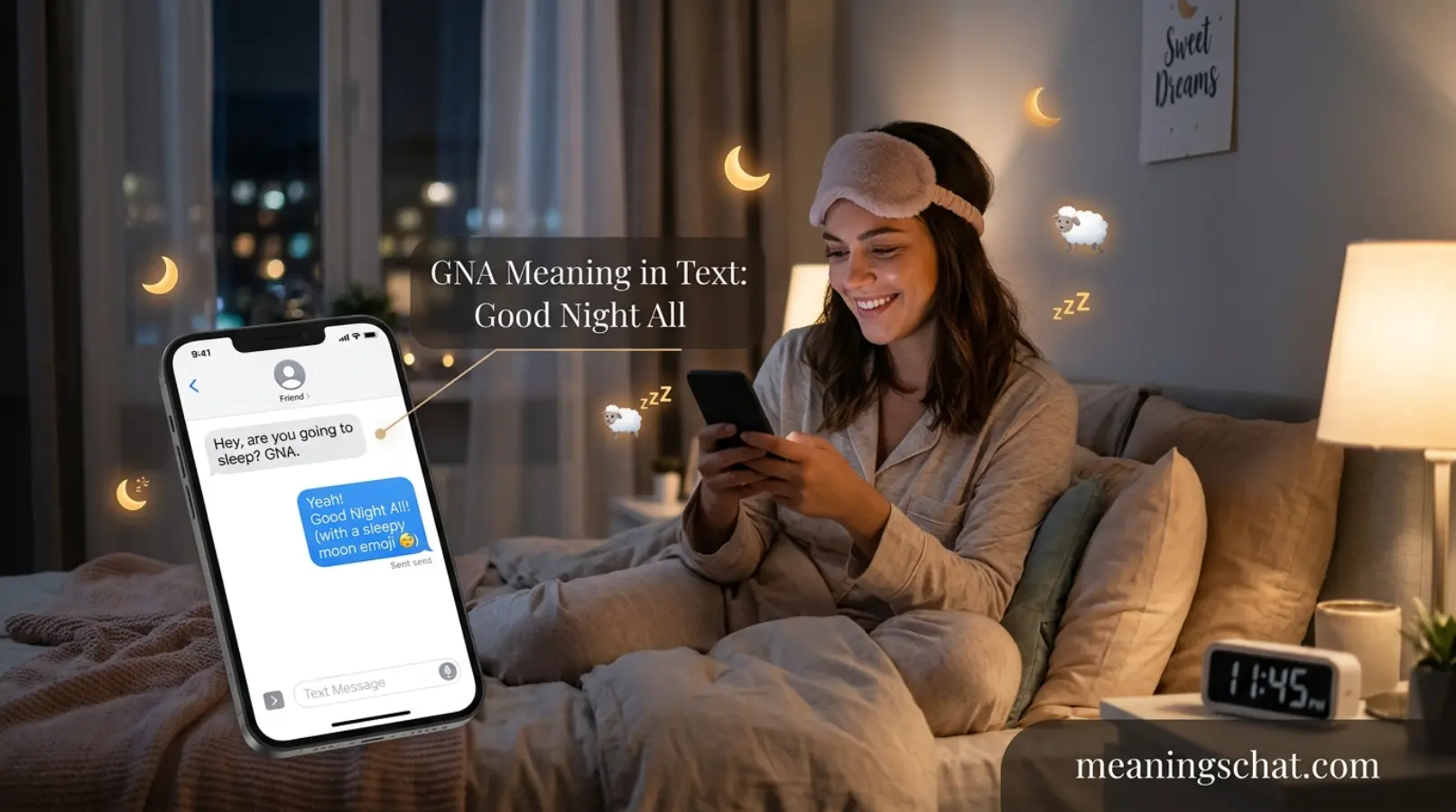
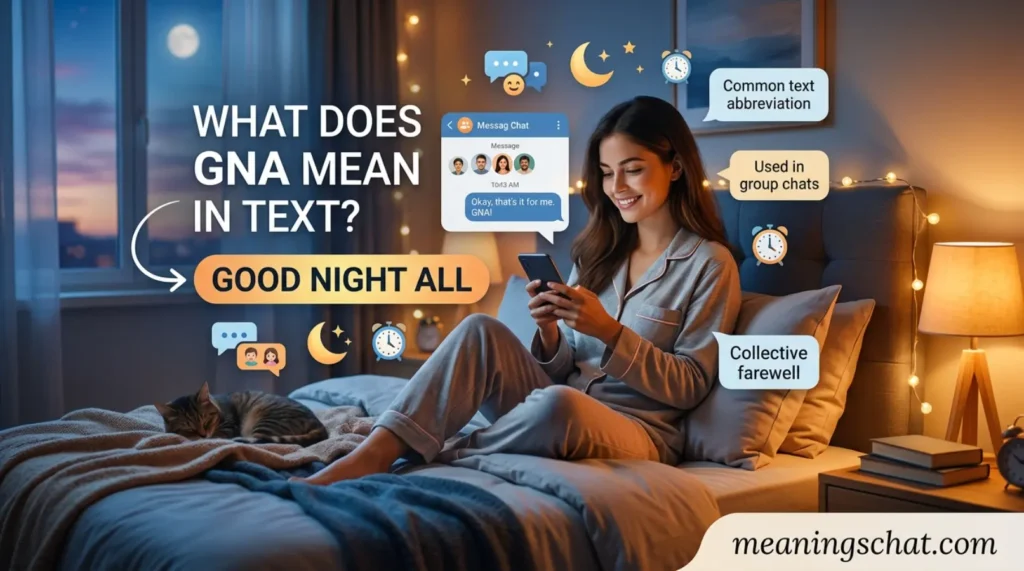
2. GNA = Good Night All (Less Common)
In some group chats or gaming communities, “GNA” can also stand for “Good Night All,” usually used when leaving a group conversation.
3. Typing Shortcut or Autocorrect Style
Sometimes people use “gna” simply because it’s faster to type, especially in rushed conversations.
Overall, the dominant meaning is still “gonna,” and that’s what most people understand instantly.
Where Is GNA Used?
The slang “gna” is widely used in informal digital spaces where quick communication matters more than grammar. You’ll mostly see it in:
1. Social Media Platforms
Apps like:
- Snapchat
- Instagram DMs
- TikTok comments
- Facebook Messenger
People use “gna” when replying quickly or casually.
2. Text Messaging
This is the most common place. Friends, classmates, or partners often use it when chatting fast without worrying about proper spelling.
3. Gaming Chats
Gamers use short forms like “gna” during live gameplay to save time while typing.
4. Teen and Young Adult Conversations
It is especially popular among teens and young adults who use slang-heavy texting styles.
Tone and Style
“Gna” is:
- Casual
- Informal
- Friendly
- Sometimes flirty depending on context
It is NOT used in formal writing or professional communication.
Examples of GNA in Conversation
Here are some real-life chat-style examples to help you understand how “gna” is used in texting:
Example 1: Daily Plans
Friend 1: What are you doing now?
Friend 2: I gna watch a movie 🎬
Example 2: Sleep Conversation
Person A: It’s late
Person B: Yeah, I gna sleep now 😴
Example 3: Hangout Plan
A: Are you coming out?
B: Not sure, I gna ask my parents
Example 4: Gaming Chat
Player 1: Ready for next round?
Player 2: Gna join in 2 mins
Example 5: Flirty Chat
A: Miss you
B: I gna see you tomorrow ❤️
Example 6: Casual Update
A: What’s up?
B: Just gna chill at home
Example 7: Group Chat Exit
User: Good night everyone, GNA 👋
These examples show how flexible and natural the slang is in everyday messaging.
When to Use and When Not To Use GNA
Understanding context is important before using slang like “gna”.
When to Use GNA
You can safely use “gna” when:
- Talking to friends or close contacts
- Chatting on social media
- Sending quick messages
- Playing online games
- Having casual conversations
It works best in relaxed, informal environments where grammar rules are not strict.
When Not to Use GNA
Avoid using “gna” in:
- School assignments or essays
- Work emails or office chats
- Formal messages (teachers, bosses, clients)
- Professional documents
Using slang in formal settings can look careless or unprofessional.
Tone Awareness
“Gna” is not rude, but it is very informal. So always think about who you are talking to before using it.
Similar Slang Words or Alternatives
If you understand “gna,” here are some related slang terms you might also see:
1. Gonna
The full casual form of “going to.”
Example: I’m gonna eat now.
2. G2G (Got to Go)
Used when someone is leaving a chat quickly.
3. BRB (Be Right Back)
Used when someone will return shortly.
4. AFK (Away From Keyboard)
Common in gaming to show temporary inactivity.
5. TTYL (Talk To You Later)
A friendly way to end conversations.
These slang terms often appear alongside “gna” in casual texting culture.
FAQs
What does GNA mean from a girl?
It usually means the same thing—“gonna.” The meaning does not change based on gender, but tone can feel more casual or expressive depending on the conversation.
Is GNA slang rude?
No, “gna” is not rude. It is just informal shorthand used in casual texting.
Can I use GNA in professional chats?
No, it is better to avoid “gna” in professional or formal communication because it is too casual.
Does GNA have any flirty meaning?
Not directly. However, in flirty conversations, it can feel more expressive depending on the sentence, like “I gna see you soon ❤️”.
Is GNA still popular in 2025?
Yes, it is still used, especially in fast texting and social media chats, although “gonna” is more commonly typed out fully now.
Conclusion
The slang “gna meaning in text” is simple once you understand it—it mainly stands for “gonna,” meaning “going to.” It is widely used in casual chats, social media messages, and gaming conversations where people prefer fast and easy typing.
While it is fun and convenient, remember that it is informal slang. Use it with friends or in relaxed conversations, but avoid it in professional or formal communication. Once you get comfortable with it, you’ll notice how naturally it fits into everyday online chatting.

Jimmy Johan is a passionate writer at Meaningschat who specializes in explaining text slang, internet terms, and digital communication trends. He is known for his simple, engaging, and reader-friendly writing style that makes modern language easy to understand. Jimmy enjoys researching online culture, social media trends, and the evolving world of texting abbreviations. Through his content, he aims to help readers stay informed, connected, and confident in today’s digital conversations.