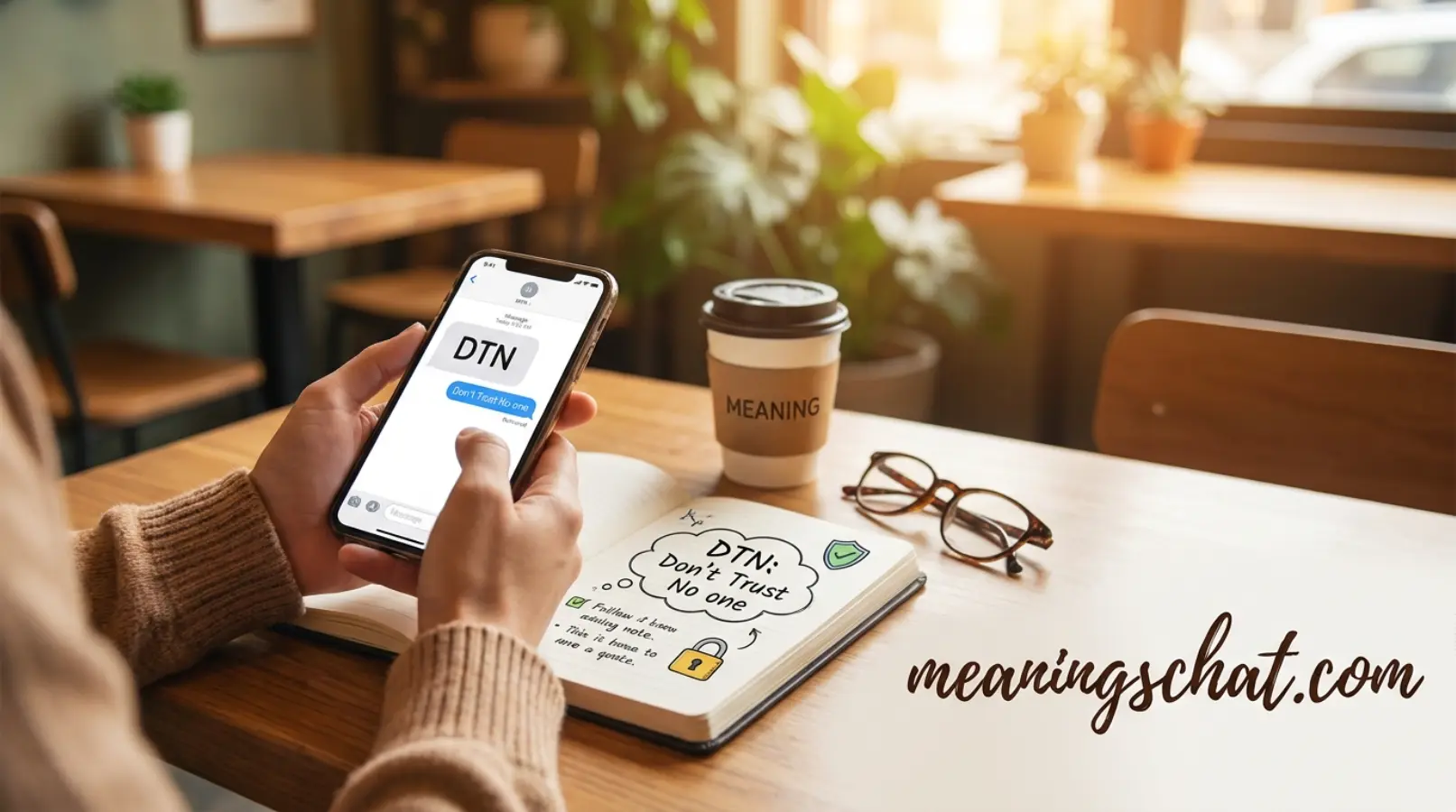
DTN meaning in text is a topic many people search for after spotting the abbreviation in a message, social media comment, or online conversation. Internet slang changes quickly, and short forms like DTN can have different meanings depending on the context. Knowing the correct definition helps you avoid misunderstandings and reply with confidence.
You might have seen someone type “DTN” in a text, on Snapchat, TikTok, Instagram, Discord, or during an online chat. Since abbreviations often carry different meanings across communities, understanding the conversation is the key to interpreting it correctly.
Quick Answer:
DTN most commonly means “Don’t Trust Nobody.” It is used to express caution, distrust, or a belief that people should rely only on themselves. In some situations, DTN may have different meanings, so context always matters.
What Does DTN Mean in Text?
The most common DTN meaning in text is “Don’t Trust Nobody.”
People use this abbreviation to show skepticism or warn others not to trust people too easily. It often appears in casual conversations, song lyrics, captions, memes, and social media posts.
For example:
- “After everything that happened, DTN.”
- “Life lesson: DTN.”
- “I learned the hard way. DTN.”
Although the phrase uses a double negative, it is intentionally written that way because it reflects common slang and informal speech.
DTN Full Form
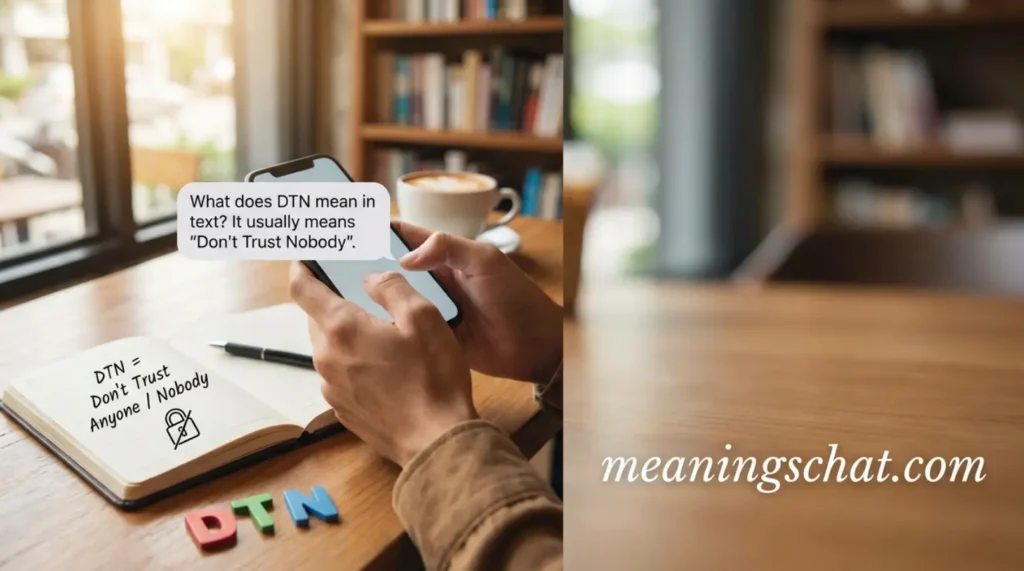
The DTN full form in texting is:
DTN = Don’t Trust Nobody
This phrase encourages people to stay careful and avoid putting complete trust in others without good reason.
Depending on the conversation, DTN can occasionally stand for technical or business-related terms such as:
| DTN Meaning | Context |
|---|---|
| Don’t Trust Nobody | Text messages, social media, slang |
| Delay Tolerant Network | Technology and networking |
| Data Transmission Network | Technical discussions |
When talking about texting or social media slang, “Don’t Trust Nobody” is almost always the intended meaning.
What Does DTN Stand For in Slang?
If someone asks, “What does DTN stand for?”, the answer is usually:
Don’t Trust Nobody
It reflects feelings such as:
- Distrust
- Disappointment
- Self-protection
- Being cautious
- Learning from negative experiences
Many users post DTN after dealing with betrayal, fake friendships, or dishonest behavior.
Is DTN Rude, Offensive, or Neutral?
DTN is generally considered neutral, but its tone depends on how it is used.
Neutral Use
Someone may simply be sharing advice based on personal experience.
Example:
“I’ve learned a lot this year. DTN.”
Negative Use
It can sound pessimistic if someone uses it to suggest that nobody can ever be trusted.
Example:
“People always disappoint you. DTN.”
Offensive Use
The abbreviation itself is not offensive. However, repeatedly using it toward specific people may make conversations feel hostile or unfriendly.
Where Is DTN Commonly Used?
DTN appears on many online platforms, including:
- Text messages
- Snapchat
- TikTok
- X (formerly Twitter)
- Discord
- Gaming chats
- YouTube comments
It is especially common in short captions where users want to express emotions using only a few characters.
Real-Life Examples of DTN
Here are several examples showing how DTN appears in different situations.
Friendly Conversation
Alex: I trusted the wrong person.
Chris: That happens sometimes. DTN, but don’t stop believing in good people.
Casual Text
“I’ve become more careful these days. DTN.”
Social Media Caption
“Peace of mind comes first. DTN.”
After Betrayal
“I ignored the warning signs. DTN.”
Gaming Chat
“Random teammates quit every match. DTN.”
Song Discussion
“This lyric basically says DTN after getting betrayed.”
Origin and Background of DTN
Like many internet abbreviations, DTN became popular through online conversations and social media.
The phrase “Don’t Trust Nobody” has appeared in:
- Hip-hop culture
- Rap lyrics
- Internet memes
- Motivational posts
- Short-form videos
- Personal quotes
People shortened the phrase to DTN because abbreviations are faster to type and easier to include in captions or comments.
Over time, the abbreviation spread across different online communities and became recognizable to many internet users.
Why People Use DTN
People prefer abbreviations because they save time and quickly communicate emotions.
Common reasons include:
- Typing faster
- Following internet trends
- Expressing disappointment
- Sharing life lessons
- Creating catchy captions
- Matching social media style
Sometimes users write only “DTN” because they assume their audience already knows what it means.
Comparison with Similar Slang
Several slang terms carry meanings that are somewhat related to DTN.
| Slang | Meaning | Tone |
|---|---|---|
| DTN | Don’t Trust Nobody | Cautious |
| IDK | I Don’t Know | Neutral |
| IMO | In My Opinion | Neutral |
| TBH | To Be Honest | Honest |
| FR | For Real | Casual |
| NGL | Not Gonna Lie | Casual honesty |
| SMH | Shaking My Head | Disappointed |
Unlike most texting abbreviations, DTN expresses an attitude rather than providing information.
DTN Meaning Slang vs Technical Meaning
The abbreviation DTN has more than one meaning.
Slang Meaning
- Don’t Trust Nobody
- Used in chats and social media
- Emotional and conversational
Technical Meaning
In computer networking, DTN means Delay Tolerant Network, a communication system designed for environments with unstable or delayed internet connections.
The meaning depends entirely on the discussion.
For example:
Technology article: DTN refers to Delay Tolerant Networking.
Instagram caption: DTN means Don’t Trust Nobody.
When Should You Avoid Using DTN?
Although DTN is common online, there are situations where it may not be appropriate.
Avoid using DTN in:
- Business emails
- Job applications
- Academic writing
- Professional presentations
- Customer support conversations
- Formal workplace communication
Many readers outside internet culture may not understand the abbreviation.
Instead, write the full message if clarity is important.
Polite Alternatives to DTN
If you want to express caution without sounding overly negative, consider these alternatives:
- Be careful who you trust.
- Choose your friends wisely.
- Trust should be earned.
- Stay cautious.
- Protect your peace.
- Think before you trust.
These phrases sound more balanced and work well in professional or everyday conversations.
Impact of Using Slang in Communication
Internet slang makes conversations:
- Faster
- More relaxed
- More relatable
- Easier for younger audiences
However, slang also has drawbacks.
Some people may misunderstand abbreviations like DTN, especially if they are unfamiliar with online culture.
The best approach is to match your language to your audience.
Is DTN Safe for Social Media?
Yes. DTN is generally safe to use on:
- TikTok
- Snapchat
- X
- Discord
It does not violate platform rules because it is simply an abbreviation.
Still, remember that repeatedly posting messages suggesting nobody can be trusted may give followers a negative impression. Balance is always important.
Examples of DTN in Different Contexts
Friendly
“I know things went badly, but DTN doesn’t mean everyone is the same.”
Casual
“Another fake friend. DTN.”
Argumentative
“You lied again. DTN from now on.”
Gaming
“I’ll play solo next time. DTN.”
Social Media
“Protect your energy. DTN.”
Motivational
“Learn from every mistake, but don’t lose hope. DTN when necessary.”
Tips for Understanding Slang Like DTN
When you see an unfamiliar abbreviation:
- Read the entire conversation.
- Look at who posted it.
- Check the topic.
- Consider the platform.
- Search trusted slang references if needed.
Context almost always reveals the intended meaning.
FAQs:
What is the DTN meaning in text?
DTN usually means “Don’t Trust Nobody.” It expresses caution or distrust in casual online conversations.
What does DTN stand for?
The most common DTN full form is Don’t Trust Nobody.
Is DTN a bad word?
No. DTN is not considered offensive, although it can sound negative depending on the situation.
Can DTN have other meanings?
Yes. In technical fields, DTN often stands for Delay Tolerant Network or other industry-specific terms.
Is DTN popular on social media?
Yes. It appears on platforms like TikTok, Instagram, Snapchat, Discord, and X, especially in captions and comments.
Should I use DTN in professional emails?
No. It is better to avoid internet slang in formal communication and use complete, clear sentences instead.
Conclusion
The DTN meaning in text most commonly refers to “Don’t Trust Nobody.” It is a popular internet slang abbreviation used to express caution, disappointment, or a reminder to be careful about trusting others. While the phrase is widely recognized on social media and in text messages, it should be used thoughtfully because its tone can seem pessimistic in certain situations.
Always pay attention to context before interpreting or using DTN. In casual conversations, it can communicate a personal lesson or emotional experience. In professional settings, however, using complete language is the better choice. Understanding abbreviations like DTN helps you communicate more clearly and confidently across today’s digital conversations.