Have you ever been chatting with someone and they suddenly replied with “awe” and you just paused for a second thinking, what does that even mean? Is it a typo, a feeling, or some kind of hidden slang? You’re not alone. Many people see “awe” in texts, social media comments, or captions and feel confused about its real meaning.
In most online conversations, “awe” is used to express a deep sense of admiration, wonder, or emotional warmth. It often appears when someone sees something cute, beautiful, heart-touching, or impressive. However, it is also commonly confused with “aww,” which has a slightly different emotional tone. In this guide, you’ll learn exactly what “awe” means in text, how to use it correctly, and when it fits naturally in conversations. You’ll also see real chat examples so you can confidently understand and use it like a pro.
What Does awe Mean in Text?
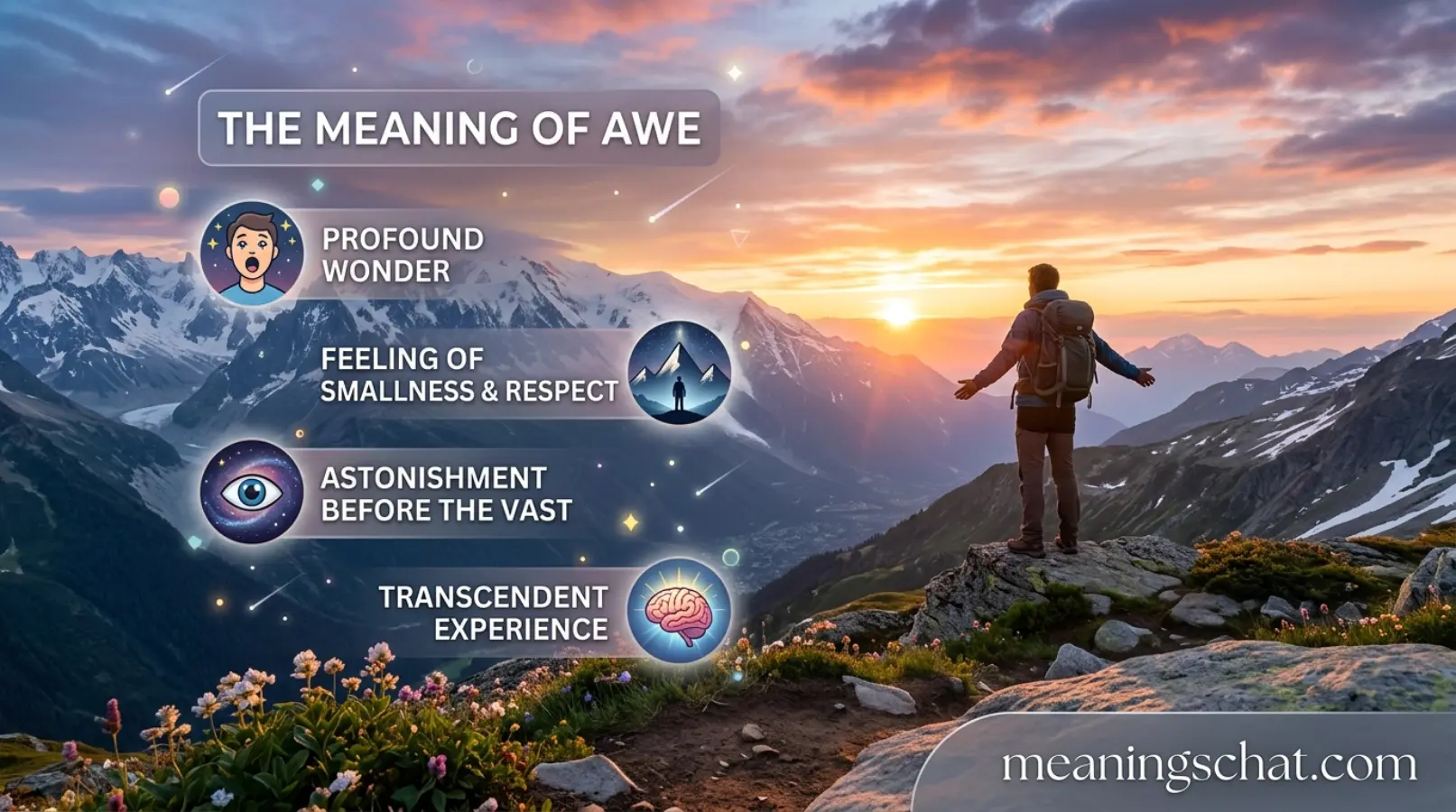
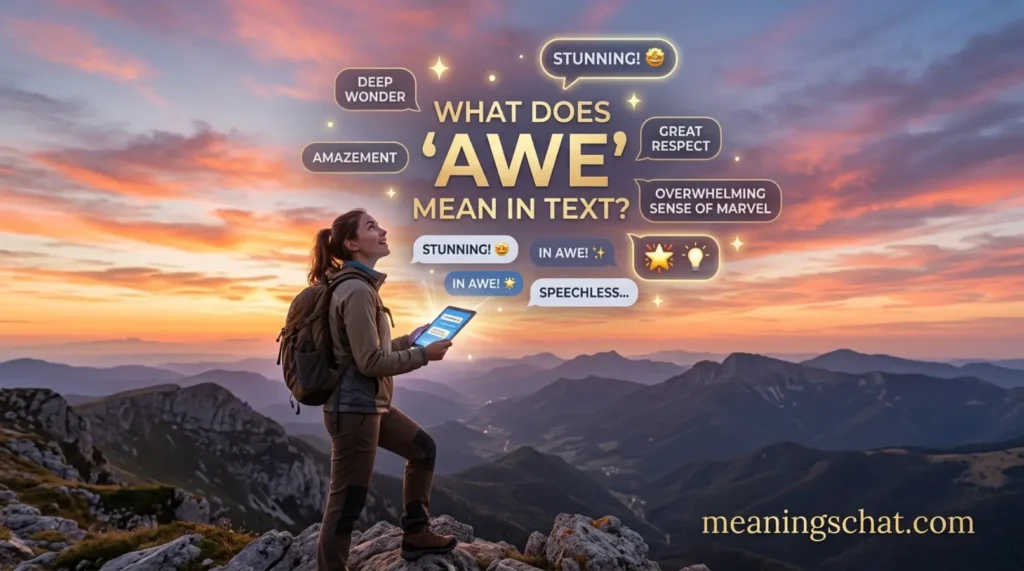
In text messaging and online communication, “awe” generally refers to a feeling of strong admiration, wonder, or amazement. It is used when something feels emotionally powerful, beautiful, or mentally impressive.
For example, if someone shares a breathtaking sunset photo or a heartwarming story, replying with “awe” means you are emotionally moved or impressed.
However, there is an important distinction:
- Awe (noun/feeling): A sense of wonder, respect, or amazement
- Aww (slang): A soft emotional reaction often used for cuteness or affection
This is where most confusion happens in texting. People often accidentally type “awe” when they actually mean “aww.” In casual chats, both are understood, but they carry slightly different emotional weight.
Key meaning in simple words:
“Awe” = deep feeling of wonder or emotional admiration
It is not an abbreviation or acronym. It is a real English word that has been adopted into texting culture as a short emotional reaction.
Where Is awe Used?
The word “awe” is commonly used across many digital platforms where people share emotions and reactions.
1. Social Media Platforms
You’ll often see “awe” in:
- Instagram comments
- TikTok reactions
- Facebook posts
- Snapchat chats
People use it when reacting to:
- Cute baby videos
- Emotional stories
- Inspirational content
- Beautiful photography
2. Private Texting
In one-on-one chats, “awe” is used to show emotional response. It is often short, quick, and informal.
3. Captions and Comments
Users sometimes write “awe” in captions to express their emotional reaction to a moment or memory.
4. Younger Audience & Casual Users
It is more common among:
- Teens and young adults
- Social media users
- Casual internet communicators
In professional or formal communication, it is rarely used.
Examples of awe in Conversation
To help you understand how “awe” is used naturally, here are some real-life chat-style examples:
Example 1: Cute moment
Friend 1: Look at this puppy I adopted
Friend 2: Awe 😍 it’s so adorable
Example 2: Emotional story
Friend 1: My little sister finally walked after months of practice
Friend 2: Awe that’s so heartwarming!
Example 3: Beautiful scenery
Friend 1: Sent a sunset picture from the mountains
Friend 2: Awe this view is unreal
Example 4: Compliment reaction
Friend 1: I got selected for the scholarship
Friend 2: Awe congratulations you deserve it!
Example 5: Flirty tone
Person A: I made breakfast for you
Person B: Awe you’re so sweet
Example 6: Inspirational moment
Friend 1: I finally started my own business today
Friend 2: Awe that’s amazing, proud of you
Example 7: Casual short reaction
Friend 1: Check out my new drawing
Friend 2: Awe 🔥
In all these examples, “awe” expresses admiration, warmth, or emotional appreciation.
When to Use and When Not To Use awe
Understanding the tone of “awe” is important because it is emotional and context-sensitive.
When to Use “awe”
You can use it when:
- You feel impressed by something
- You see something emotionally touching
- You want to show admiration or respect
- You react to cute or beautiful content
- You are in casual conversations with friends
It works best in:
- Friendly chats
- Social media comments
- Light emotional moments
- Informal texting
When NOT to Use “awe”
Avoid using it when:
- Writing professional emails
- Talking to teachers or bosses
- Formal academic writing
- Serious or sensitive situations where clarity is needed
For example:
❌ “Awe, I have submitted the report” (wrong tone)
✔ “I have submitted the report” (correct)
Important Tip
If you are unsure, remember this:
- “Awe” = emotional reaction (wonder or admiration)
- It should feel natural, not forced
Also, in casual texting, many people actually intend to write “aww” instead of “awe,” so always check context carefully.
Similar Slang Words or Alternatives
If you want to express similar feelings in text, here are some related slang words:
1. Aww
Used to show cuteness or affection
Example: Aww that baby is adorable
2. Wow
Used for surprise or amazement
Example: Wow that’s incredible!
3. OMG
Used for shock or excitement
Example: OMG I can’t believe this happened
4. ❤️ Heart emojis
Used to express love or emotional warmth
Example: That’s so sweet ❤️
5. That’s amazing
A more complete phrase for admiration
Example: That’s amazing, well done!
These alternatives can sometimes replace “awe” depending on the situation and emotional tone.
FAQs
What does awe mean from a girl?
When a girl uses “awe,” it usually means she finds something cute, sweet, or emotionally touching. It is not gender-specific and simply shows emotional appreciation.
Is awe slang rude?
No, “awe” is not rude at all. It is a positive emotional expression used to show admiration, wonder, or warmth.
Can I use awe in professional chats?
It is not recommended. “Awe” is too casual and emotional for professional or formal communication.
Does awe have any flirty meaning?
Sometimes it can feel flirty depending on context, especially when reacting to sweet gestures. However, it is not inherently flirty.
Is awe still popular in 2025?
Yes, but it is less common than “aww” or emojis. Still, it is widely understood in social media and texting culture.
Conclusion
In simple terms, “awe” in text means a feeling of deep admiration, wonder, or emotional appreciation. It is used when something feels beautiful, heartwarming, or impressive. While it is often confused with “aww,” both serve different emotional purposes in conversations.
If you want to use it confidently, just remember: use “awe” when you genuinely feel impressed or emotionally moved, and keep it for casual chats rather than formal communication. With this understanding, you can now easily recognize and use “awe” in your everyday online conversations without confusion.

Jimmy Johan is a passionate writer at Meaningschat who specializes in explaining text slang, internet terms, and digital communication trends. He is known for his simple, engaging, and reader-friendly writing style that makes modern language easy to understand. Jimmy enjoys researching online culture, social media trends, and the evolving world of texting abbreviations. Through his content, he aims to help readers stay informed, connected, and confident in today’s digital conversations.