If you’ve ever been texting someone and suddenly seen a message like “Yay!!! 🎉” or just “yay” and paused for a second, wondering what it really means—you’re not alone. Many people come across this small but expressive word in chats, social media comments, or even captions and don’t fully understand its tone. Is it just excitement? Is it sarcastic? Or does it mean something deeper in texting culture?
In most cases, “yay” is used to show happiness, excitement, or celebration in a very simple and casual way. It’s one of those universal internet expressions that can appear anywhere—from friendly chats to Instagram stories. In this article, we’ll break down exactly what “yay” means in text, how people use it, when it fits, and when it might not. You’ll also see real examples to help you use it confidently in your own conversations.
What Does Yay Mean in Text?
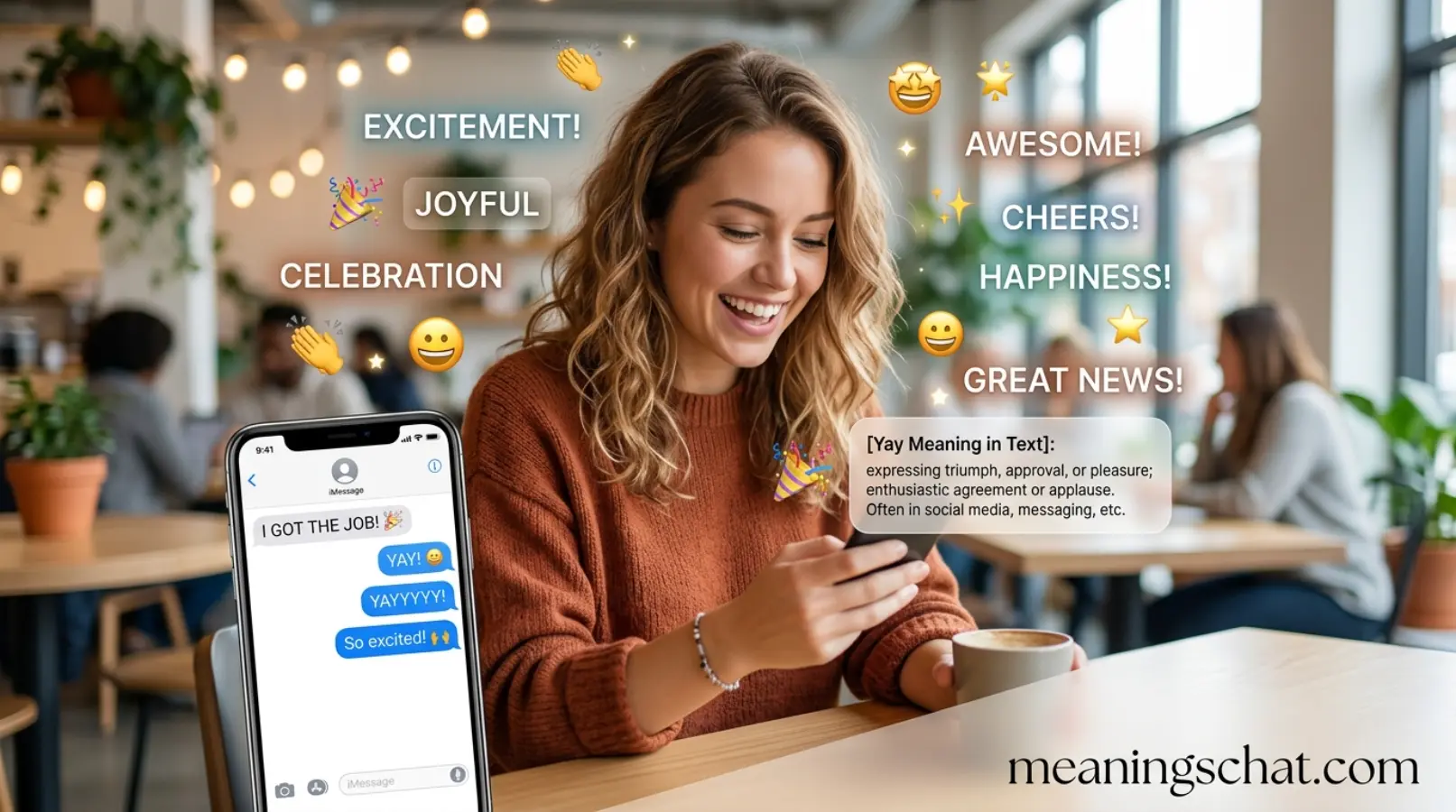
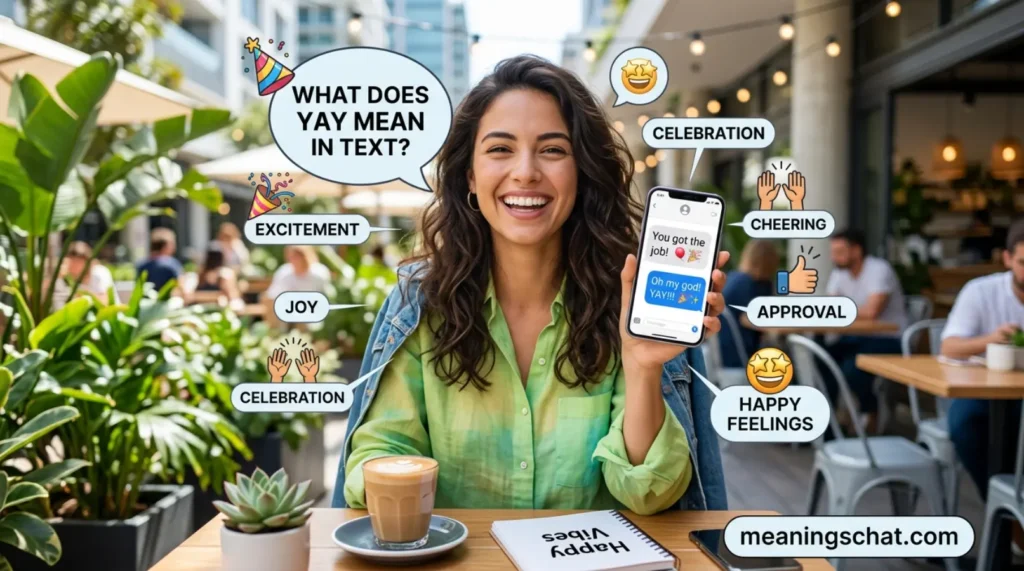
In text messaging and online chats, “yay” is an informal expression used to show happiness, excitement, or approval. It is basically the written version of cheering or celebrating something.
For example:
- If someone says, “We’re going on a trip tomorrow,” replying with “yay!” means you are happy and excited about it.
The meaning is simple and emotional rather than literal. It doesn’t stand for any full form or abbreviation. Instead, it is a natural sound people make when they are joyful.
Key meanings of “yay” in text:
- Happiness 😊
- Excitement 🎉
- Approval 👍
- Celebration 🎊
Does “yay” have different meanings?
Yes, in rare cases, tone matters:
- Happy yay: “Yay! I passed my exam!”
- Sarcastic yay: “Yay… more homework.”
The sarcastic version depends on context, punctuation, and emojis.
So, “yay” is flexible and mostly depends on how the sender uses it.
Where Is Yay Used?
“Yay” is widely used across almost all digital platforms because it is short, expressive, and easy to type. It is part of everyday internet language.
Common platforms where “yay” appears:
1. Text messaging apps
People use it in WhatsApp, SMS, Messenger, and similar apps during casual conversations with friends and family.
2. Social media
On Instagram, Facebook, and TikTok, users often comment “yay” on posts related to good news, achievements, or happy moments.
3. Gaming chats
Gamers use “yay” when they win a match, unlock something, or achieve a goal.
4. Online communities
Forums and group chats also use it as a quick reaction to positive updates.
Who uses it the most?
- Teenagers and young adults
- Social media users
- Casual internet communicators
- Gamers and online communities
It is not limited to any specific group, but it is more common in informal and friendly conversations.
Examples of Yay in Conversation
To understand “yay” better, let’s look at how it appears in real chat situations.
1. Excitement about plans
Friend 1: We’re going to the beach tomorrow!
Friend 2: Yay! I’ve been waiting for this 😍
2. Happy achievement
Friend: I got selected for the team!
You: Yay! Congratulations 🎉
3. Casual approval
Person A: Let’s watch a movie tonight.
Person B: Yay, sounds fun!
4. Flirty tone
Crush: I saved you a seat next to me 😊
You: Yay, I’ll be there 😄
5. Sarcastic use
Student: We have extra homework for the weekend.
Student: Yay… just what I needed 🙃
6. Social media comment
Post: “Got my first job today!”
Comment: Yay!!! So proud of you 👏
7. Gaming reaction
Player: We won the match!
Teammate: Yay! GG everyone 🎮
These examples show that “yay” can fit in many moods—happy, playful, or even sarcastic.
When to Use and When Not To Use Yay
Even though “yay” is simple, knowing when to use it helps you sound natural and appropriate.
When to use “yay”:
- Casual conversations with friends
- Celebrating good news
- Reacting to fun plans or events
- Commenting on social media posts
- Expressing excitement in a light tone
When NOT to use “yay”:
- Formal emails or professional messages
- Serious or sensitive situations
- Academic writing
- Workplace communication (in most cases)
Tone understanding:
- Friendly tone: Perfect use
- Casual tone: Very common
- Professional tone: Not recommended
- Serious situations: Avoid completely
Using “yay” in the wrong setting may make your message feel too informal or immature. For example, replying “yay” to a serious work update might not be appropriate.
Similar Slang Words or Alternatives
If you like using “yay,” there are other similar slang expressions that show excitement or reaction.
1. Woohoo
Used for strong excitement or celebration
Example: “Woohoo! We won the match!”
2. Yippee
A cheerful expression of joy, often playful
Example: “Yippee! It’s weekend!”
3. Hooray
A classic expression of celebration
Example: “Hooray! You did it!”
4. OMG
Used for surprise or excitement (positive or negative)
Example: “OMG, I can’t believe it!”
5. Nice
A simple modern reaction showing approval
Example: “Nice! That’s awesome!”
These alternatives can be used depending on how strong or expressive you want your reaction to be.
FAQs
What does yay mean from a girl?
When a girl says “yay,” it usually means she is happy, excited, or pleased about something. The meaning is not gender-specific—it depends on context.
Is yay slang rude?
No, “yay” is not rude. It is a positive and friendly expression used to show happiness or excitement.
Can I use yay in professional chats?
Generally, no. “Yay” is too casual for professional or formal communication. It is better used in personal conversations.
Does yay have any flirty meaning?
Not directly. However, in flirty chats, “yay” can show excitement or happiness toward someone’s message, which may feel playful depending on context.
Is yay still popular in 2025?
Yes, “yay” is still widely used in 2025. It remains a common internet expression because it is short, simple, and universally understood.
Conclusion
“Yay” in text is a simple but powerful expression of happiness, excitement, or approval. It is widely used in casual chats, social media posts, and gaming conversations to show positive emotions quickly. While it doesn’t have a hidden meaning, its tone can change depending on context—sometimes cheerful, sometimes sarcastic.
The key to using “yay” confidently is understanding where it fits. Stick to friendly and informal conversations, and you’ll always sound natural. Next time something good happens in a chat, don’t hesitate—just say “yay!” and share the excitement instantly.

William Jones is a dedicated writer at Meaningschat who specializes in explaining text slang, abbreviations, and online language trends. He enjoys creating simple, engaging, and reader-friendly content that helps people understand modern digital communication with ease. His writing style is clear, conversational, and informative, making complex internet terms easy for everyone to follow. In his free time, William loves exploring social media trends, reading about digital culture, and discovering how online language continues to evolve.