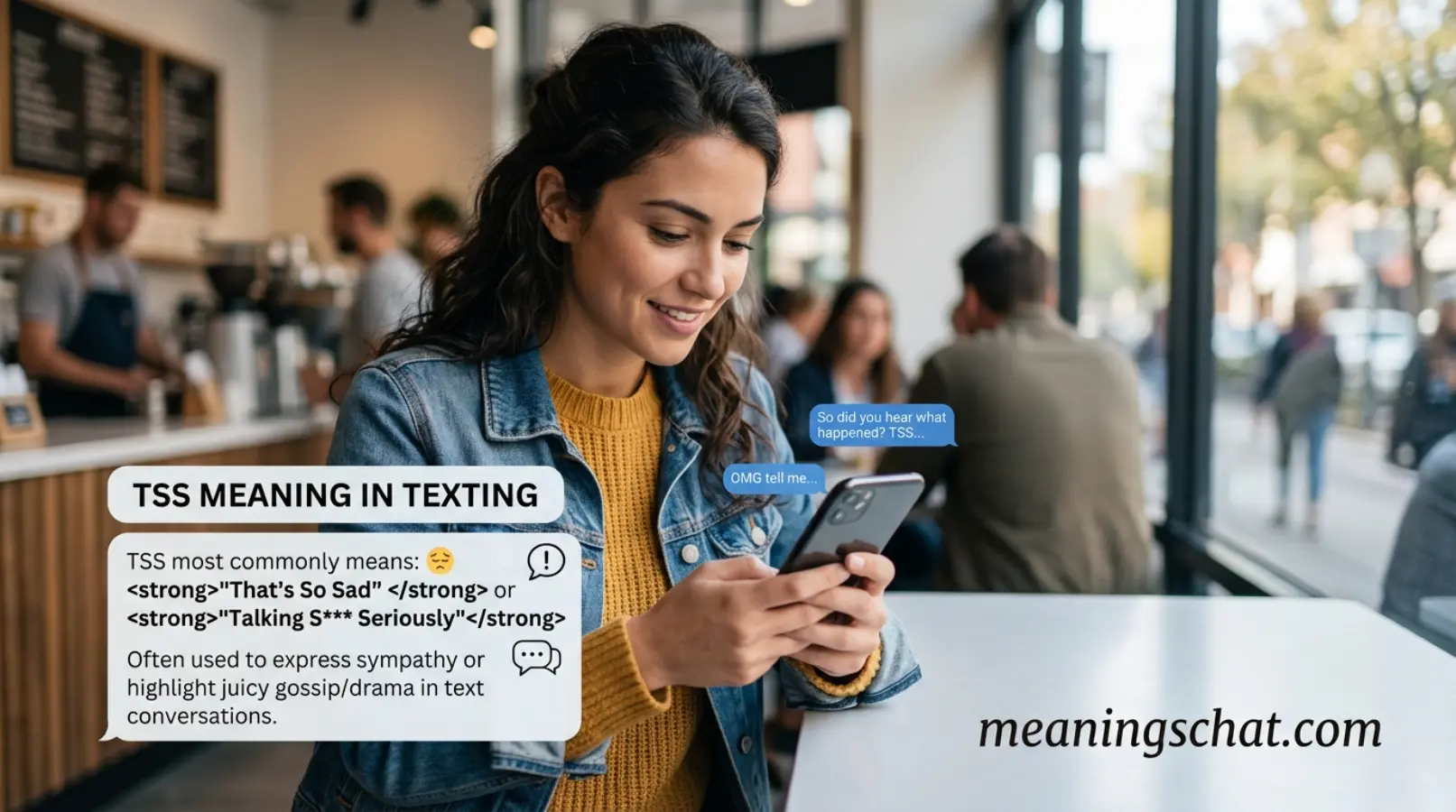
You’re scrolling through a chat, maybe on Snapchat, Instagram, or WhatsApp, and suddenly someone replies with: “tss 😏” or “tss, seriously?” At first, it looks random—almost like a typo. You pause for a second and wonder what it actually means. Is it an emoji replacement? A slang word? Or just a sound effect?
If you’ve ever felt confused by “tss” in messages, you’re not alone. This short expression is widely used in texting and social media conversations, but its meaning depends on tone and context. Sometimes it shows annoyance, sometimes sarcasm, and other times playful teasing.
In this guide, you’ll learn exactly what “tss” means in texting, where it’s used, how people use it in real conversations, and when you should (or shouldn’t) use it. Let’s break it down in a simple and relatable way.
What Does TSS Mean in Text?
In texting, “tss” is an informal expression that represents a sound people make with their tongue to show emotion. It is not a full acronym like “LOL” or “BRB.” Instead, it is a sound-based slang.
💡 Primary meaning of TSS:
- “Tss” = Tsk sound
- Used to show:
- Disapproval
- Mild annoyance
- Disappointment
- Sarcasm
- Playful teasing
It’s similar to the sound “tsk tsk” people make when they are not fully happy with something.
🧠 Example of the emotion behind it:
- “Tss… you should’ve known better.”
→ This usually means slight disappointment or teasing.
📌 Important note:
“Tss” can change meaning depending on how it is used:
- With emojis 😏😂 → playful or joking
- Without emojis → more serious or slightly rude tone
So, it’s not a fixed word—it’s an emotion indicator in chats.
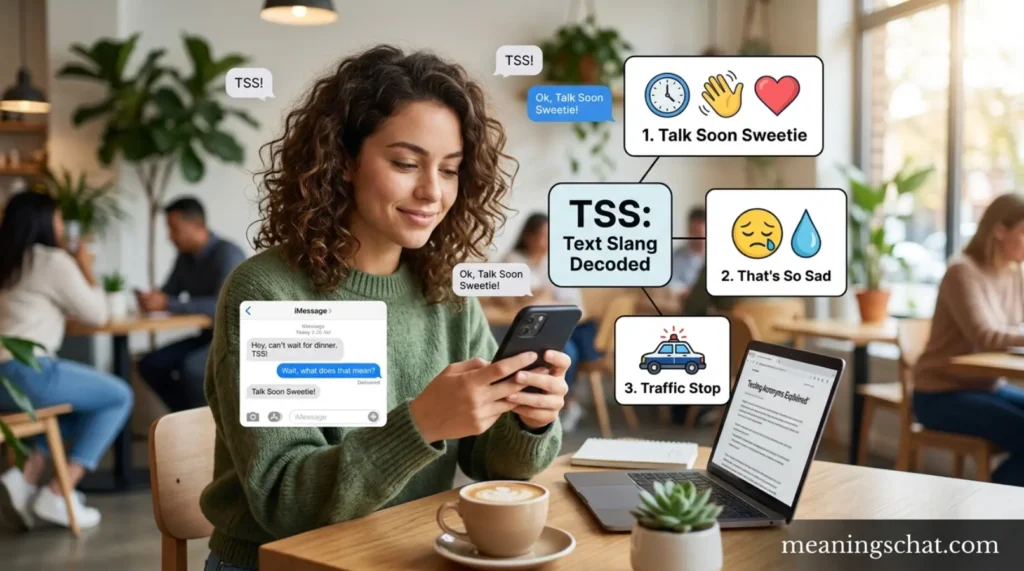
Where Is TSS Used?
“Tss” is commonly used in casual online conversations, especially where people communicate quickly and emotionally.
📱 Popular platforms:
- WhatsApp chats
- Instagram DMs and comments
- Snapchat conversations
- TikTok comments
- Gaming chats (Discord, in-game messaging)
👥 Who uses it most?
- Teenagers and young adults
- Social media users
- Gamers
- People who text informally with friends
💬 Why it’s popular:
Because texting often lacks tone, people use “tss” to express feelings quickly without writing long sentences. It replaces facial expressions and sounds you would normally make in real life.
For example, instead of typing:
“I’m disappointed in what you did.”
Someone might simply write:
“tss…”
It’s short, expressive, and emotionally loaded—even though it’s just three letters.
Examples of TSS in Conversation
To understand “tss” properly, let’s look at real chat-style examples. These will show how the meaning changes depending on context.
😏 1. Playful teasing
A: I finished the game before you again
B: tss, you always cheat somehow 😂
👉 Here, “tss” is playful and joking.
😒 2. Mild disappointment
A: I forgot your birthday again
B: tss… seriously?
👉 This shows disappointment but not extreme anger.
😂 3. Friendly sarcasm
A: I’m the smartest person in the group
B: tss, sure you are 😆
👉 Used sarcastically among friends.
😌 4. Light judgment
A: I studied all night but still failed
B: tss, you should’ve slept instead of cramming
👉 Shows “I told you so” kind of reaction.
😳 5. Flirty teasing
A: You didn’t reply to me all day 😏
B: tss, someone is missing me huh?
👉 In flirting, “tss” becomes playful and teasing.
😤 6. Annoyed reaction
A: I borrowed your charger and broke it
B: tss… you’re unbelievable
👉 This version feels more serious and irritated.
😆 7. Joke reaction
A: I think I can beat you in a race
B: tss, dream on bro 😂
👉 Lighthearted and humorous.
When to Use and When Not to Use TSS
Even though “tss” is common in texting, it’s important to understand its tone before using it.
✅ When to use TSS:
- Talking with close friends
- Casual conversations online
- Flirty or playful chats
- Reacting humorously to something silly
- Light teasing situations
❌ When NOT to use TSS:
- Professional messages (emails, work chats)
- Formal conversations (teachers, clients, interviews)
- Sensitive or serious discussions
- When talking to someone you don’t know well
⚠️ Why it matters:
“Tss” can sometimes sound:
- Rude
- Dismissive
- Judgmental
For example:
Boss: “Please send the report.”
You: “tss…”
This would be considered unprofessional and disrespectful.
🧠 Simple rule:
If you wouldn’t make the “tsk” sound in real life in that situation, don’t type “tss” either.
Similar Slang Words or Alternatives
If you’re trying to express similar emotions, here are some common slang alternatives:
😏 1. Tsk / Tsk tsk
- Classic written form of disapproval or disappointment
😂 2. LOL
- Laughing out loud, used for funny reactions instead of sarcasm
😬 3. Oof
- Reaction to awkward or bad situations
😒 4. SMH
- “Shaking my head,” used for disappointment or disbelief
😆 5. Hmph
- Another sound-based expression for annoyance or pride
These alternatives often overlap with “tss,” but each has slightly different emotional tone.
FAQs
1. What does TSS mean from a girl?
When used by a girl in texting, “tss” usually means playful teasing, sarcasm, or mild disappointment. The tone depends on emojis and context, not gender.
2. Is TSS slang rude?
It can be. “Tss” may sound rude if used in serious conversations. However, among friends, it is often harmless and playful.
3. Can I use TSS in professional chats?
No, it is not suitable for professional or formal communication. It may be misunderstood or seen as disrespectful.
4. Does TSS have a flirty meaning?
Yes, in some cases. In flirty chats, “tss” is used in a teasing way to show attraction, humor, or playful attitude.
5. Is TSS still popular in 2025?
Yes, “tss” is still commonly used in casual texting and social media, especially among younger users, though its usage is more situational than universal.
Conclusion
In simple terms, “tss” in texting is a sound-based slang used to express emotion like sarcasm, annoyance, teasing, or disappointment. It is not a formal acronym but a casual expression that adds tone to digital conversations.
The key to using it correctly is understanding context. Among friends, it can feel funny and playful. But in serious or professional situations, it may come across as rude or unclear.
So next time you see or use “tss,” remember it’s not just three letters. It’s a tiny emotional reaction packed into your chat.

William Jones is a dedicated writer at Meaningschat who specializes in explaining text slang, abbreviations, and online language trends. He enjoys creating simple, engaging, and reader-friendly content that helps people understand modern digital communication with ease. His writing style is clear, conversational, and informative, making complex internet terms easy for everyone to follow. In his free time, William loves exploring social media trends, reading about digital culture, and discovering how online language continues to evolve.