Ever received a simple “k” from a guy and suddenly started overthinking the entire conversation? You’re not alone. This tiny message often shows up in texts, Snapchat replies, or Instagram chats, and it can feel confusing, cold, or even a little frustrating when you don’t know what it really means. At first glance, it looks harmless—but the tone behind it can change everything.
In reality, “k” is one of the most common short replies in texting culture, and its meaning depends heavily on context, relationship, and the way it is sent. In this guide, you’ll learn exactly what it means when a guy uses “k,” how to read between the lines, and when you should or shouldn’t worry about it.
What Does k Meaning in Text from a Guy Mean in Text?
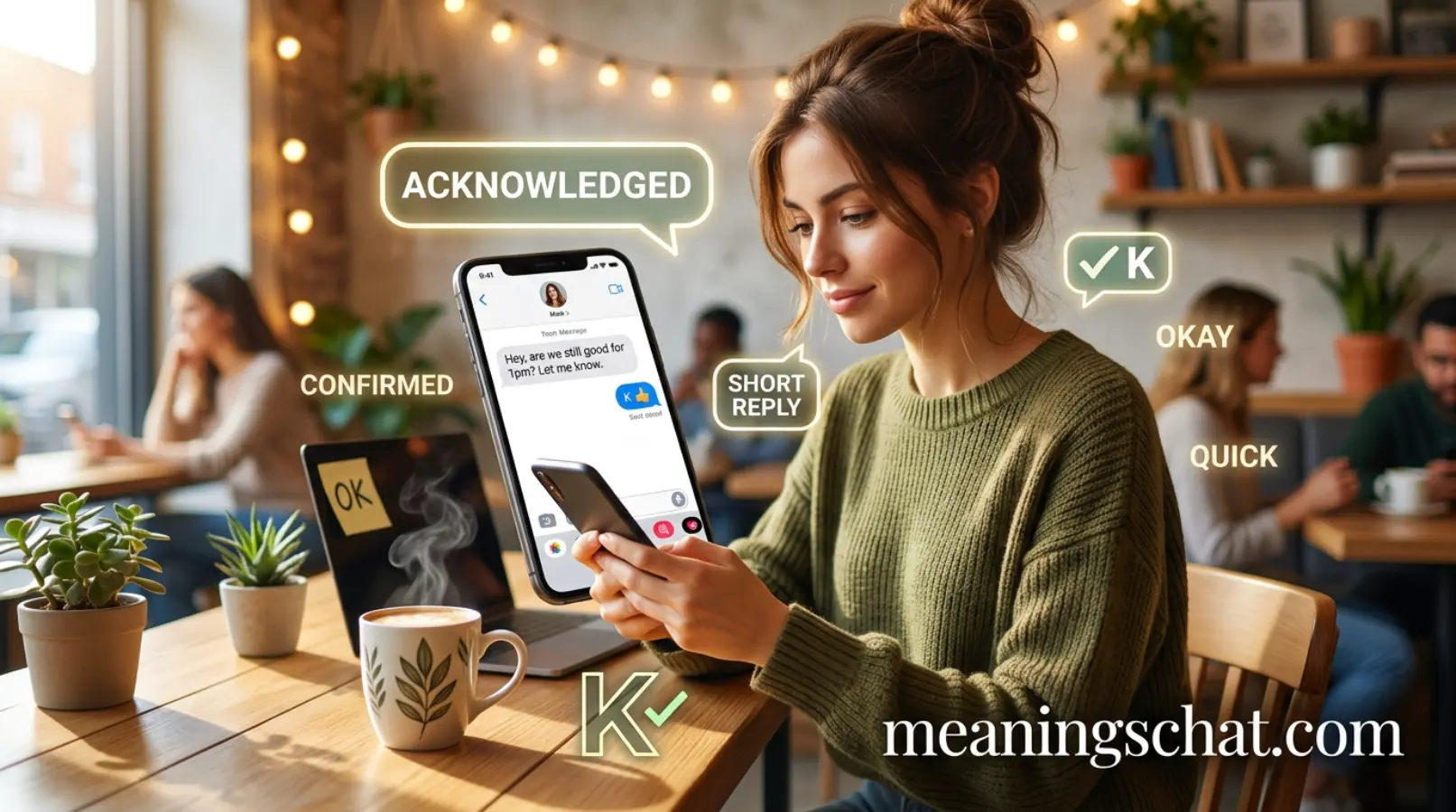
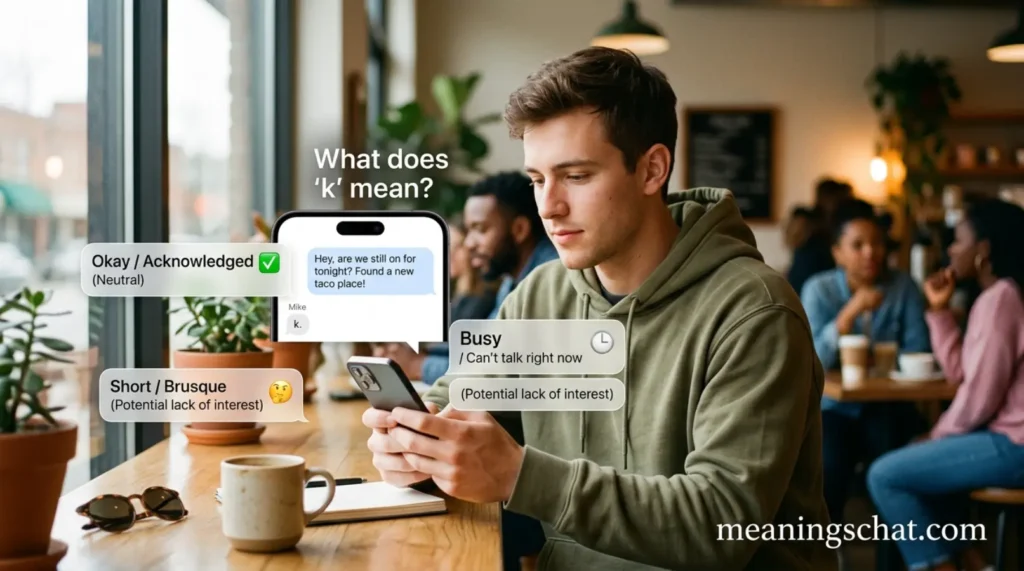
The term “k” in texting is a shortened version of “OK.” It is used to acknowledge a message, confirm something, or show that the person has read what you said.
However, the meaning changes depending on tone and situation, especially when it comes from a guy in a conversation.
Here are the most common interpretations:
1. Simple acknowledgement
Most of the time, “k” just means:
- “I saw your message”
- “I understand”
- “Okay”
It’s a quick and lazy way to respond without adding extra effort.
2. Neutral or low-interest response
When a guy sends “k” without emojis or follow-up questions, it may suggest:
- He is not interested in continuing the conversation
- He is busy or distracted
- He is replying out of habit
3. Slightly cold or distant tone
In some situations, especially in emotional or serious conversations, “k” can feel:
- Short
- Emotionless
- Passive-aggressive
This doesn’t always mean he is angry, but it can indicate a lack of emotional engagement.
4. Casual habit texting
Some guys naturally text very minimally. For them:
- “k” is normal
- They don’t think it sounds rude
- They prefer short communication
So overall, “k” is not always negative—it depends heavily on context.
Where Is k Meaning in Text from a Guy Used?
The “k” reply is used almost everywhere in digital communication. It is especially common in:
1. Messaging apps
- Messenger
- iMessage
- Telegram
Guys often use “k” when they want to respond quickly without typing long sentences.
2. Social media chats
On platforms like:
- Instagram DMs
- Snapchat
- TikTok messages
It is often used in fast-paced, casual conversations.
3. Gaming chats
In gaming environments, speed matters. So “k” is used to:
- Confirm instructions
- Acknowledge team messages
- Keep communication short
4. Teen and young adult conversations
Younger users often prefer short forms like:
- k
- lol
- ok
It’s part of modern texting culture where speed matters more than grammar.
Examples of k Meaning in Text from a Guy in Conversation
Here are some realistic examples to help you understand how “k” appears in real chats:
Example 1: Simple confirmation
You: Meet me at 5?
Him: k
Example 2: Neutral response
You: I’ll send you the file later
Him: k
Example 3: Slightly distant tone
You: I don’t think this is working between us
Him: k
Example 4: Busy response
You: Are you coming online tonight?
Him: k
Example 5: Casual friendly chat
You: Don’t forget the match tomorrow
Him: k bro
Example 6: Slightly annoyed tone
You: You didn’t reply for hours
Him: k
Example 7: Flirty but minimal reply
You: I miss talking to you
Him: k 😏
Each of these shows how the same word can feel very different depending on tone, timing, and emojis.
When to Use and When Not To Use k Meaning in Text from a Guy
Understanding when to use “k” is important because it can easily change how your message is interpreted.
When it is okay to use “k”
You can safely use “k” when:
- You are confirming plans
- You are acknowledging simple information
- The conversation is casual and light
- You don’t need to continue the chat
Example:
- “Dinner at 8?” → “k”
When NOT to use “k”
Avoid using “k” when:
- Someone is sharing emotional feelings
- You are in a serious discussion
- You are trying to keep a conversation going
- You want to show interest or care
Example (bad use):
- “I really like you and miss you” → “k”
This can feel cold or dismissive.
In relationships or flirting
In romantic chats, “k” can sometimes be misunderstood. It may:
- Seem uninterested
- End the conversation quickly
- Create emotional distance
So if you want to keep things warm, it’s better to use:
- “okay 😊”
- “got it”
- “sure thing”
Similar Slang Words or Alternatives
Here are some similar texting abbreviations you might see:
1. OK
The full version of “k,” slightly more neutral and polite.
2. KK
A more casual and friendly version of “okay.” Often used to sound less cold.
3. Got it
Shows understanding with a warmer tone.
4. Alright
A relaxed confirmation, often used in casual chats.
5. Sure
Used to agree or confirm plans politely.
These alternatives help avoid misunderstandings that sometimes come with “k.”
FAQs
What does k mean from a guy?
It usually means “okay” or acknowledgment. However, tone can change its meaning from neutral to slightly distant.
Is k slang rude?
Not always. It can be neutral, but in emotional conversations, it may feel cold or uninterested.
Can I use k in professional chats?
It’s better to avoid it in professional or formal communication. Use “okay” or “noted” instead.
Does k have a flirty meaning?
No, “k” itself is not flirty. However, emojis or context can slightly change the tone.
Is k still popular in 2025?
Yes, “k” is still widely used because it is fast, simple, and commonly understood across messaging platforms.
Conclusion
The meaning of “k” in text from a guy is simple on the surface but can carry different tones depending on context. Most of the time, it just means “okay” or acknowledgment. However, in emotional or personal conversations, it can sometimes feel cold or distant.
The key to understanding it is to look at the situation, timing, and the person’s usual texting style. If a guy normally texts short messages, “k” is likely just his habit. But if he suddenly switches to short replies, it might signal low interest or emotional distance.
Use this knowledge to read conversations more confidently, and don’t stress over a single letter it’s just one piece of the bigger communication picture.

William Jones is a dedicated writer at Meaningschat who specializes in explaining text slang, abbreviations, and online language trends. He enjoys creating simple, engaging, and reader-friendly content that helps people understand modern digital communication with ease. His writing style is clear, conversational, and informative, making complex internet terms easy for everyone to follow. In his free time, William loves exploring social media trends, reading about digital culture, and discovering how online language continues to evolve.