If you spend time on social media, gaming chats, or messaging apps, you might have come across the term “GFYS” and wondered what it means. At first glance, it looks like a random combination of letters, but in reality, it carries a very strong and offensive meaning.
Internet slang often develops as short forms to express emotions quickly, and GFYS is one of those abbreviations used in heated or emotional situations.
People usually encounter it during arguments, online fights, or frustrated conversations. Because it is not a polite expression, many users search for its meaning to understand what was actually said.
In this article, you will learn the full form of GFYS, its meaning, usage, examples, tone, and whether it is appropriate to use in conversations.
What Does GFYS Mean in Text?
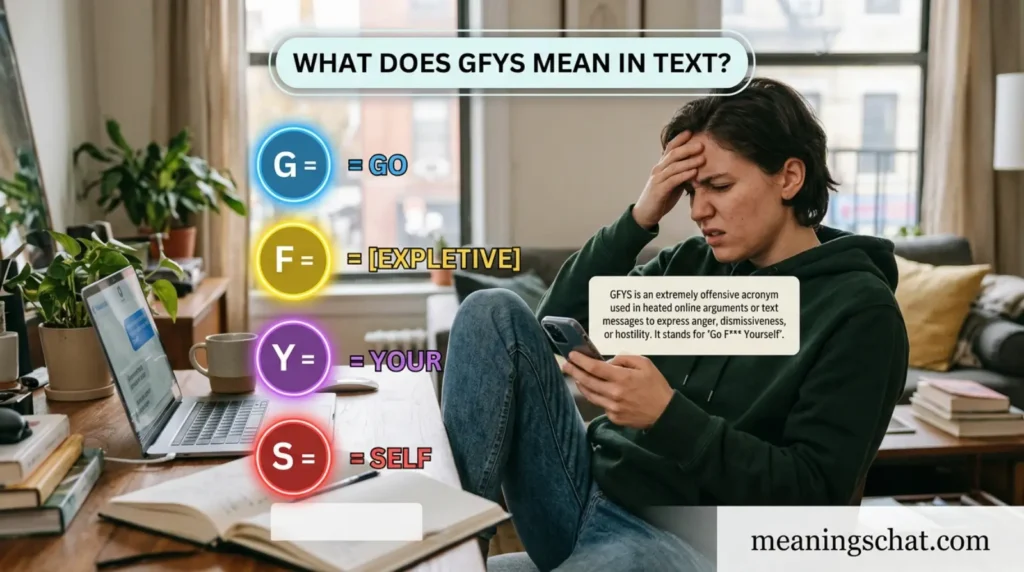
The abbreviation GFYS stands for:
👉 Go F* Yourself**
This is a very offensive insult used to express anger, disrespect, or strong frustration toward another person. It is not a friendly or casual phrase and should be understood as rude language.
Simple meaning:
GFYS = telling someone in a harsh way that you are angry at them or rejecting them in a disrespectful manner.
Important points:
- It is not polite slang
- It is considered vulgar language
- It is mostly used during arguments or emotional outbursts
- It can easily hurt or offend people
Although sometimes people may use it jokingly among close friends, it still remains a strong and potentially offensive expression.
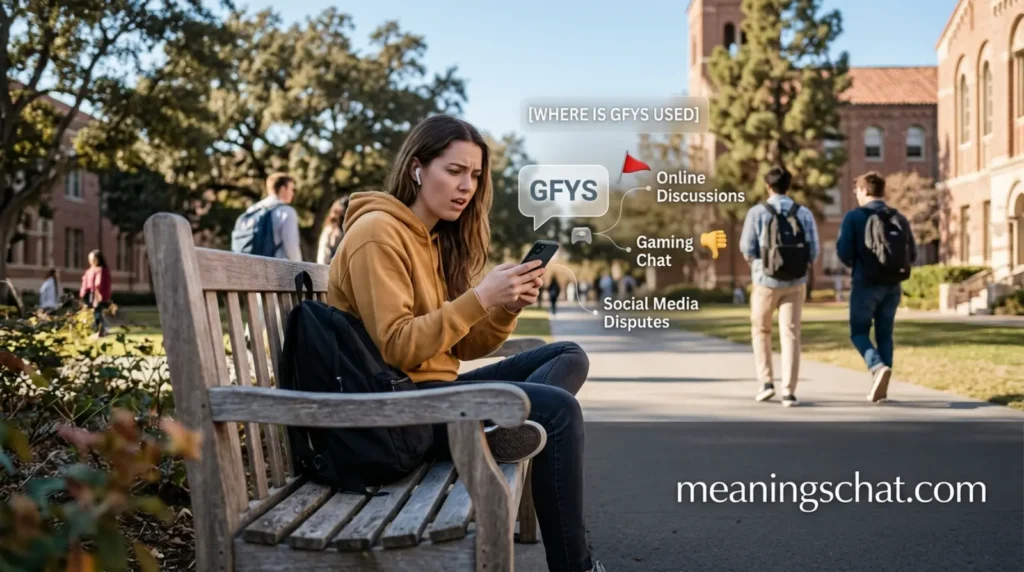
Where Is GFYS Used?
GFYS is commonly seen in informal digital communication, especially where people express emotions without filtering their words.
Common platforms include:
- 💬 Text messaging apps (WhatsApp, Messenger, etc.)
- 📱 Social media platforms (Instagram, X/Twitter, TikTok comments)
- 🎮 Online gaming chats (especially competitive games)
- 🗨️ Forums or comment sections during heated debates
Who uses it?
- Teenagers during online arguments
- Gamers reacting to frustration in matches
- Social media users in comment fights
- People expressing anger quickly in private chats
It is rarely used in serious or professional environments because of its rude tone.
Tone and Emotional Meaning of GFYS
Understanding the tone is very important.
GFYS usually expresses:
- 😡 Anger
- 😤 Frustration
- 💢 Disrespect
- ⚡ Sudden emotional reaction
Sometimes it may also be used in:
- 😏 Sarcasm (rare and risky)
- 😂 Joke between close friends (very context-dependent)
However, even in joking situations, it can be misunderstood easily.
Examples of GFYS in Conversation
Here are some realistic examples of how GFYS appears in chats:
1. Heated argument
A: You always ruin everything!
B: GFYS, I didn’t do anything wrong!
2. Online gaming frustration
Player 1: Stop blaming me for losing
Player 2: GFYS, you keep feeding the enemy!
3. Social media comment fight
User A: Your opinion makes no sense
User B: GFYS, nobody asked you!
4. Personal chat conflict
Friend 1: You lied to me again
Friend 2: GFYS, I don’t want to talk right now
5. Sarcastic joke (rare)
Friend 1: I ate your food again 😅
Friend 2: GFYS bro, you never listen!
6. Online disagreement
User A: That’s completely wrong information
User B: GFYS, check your facts first
7. Emotional reaction
A: I trusted you and you betrayed me
B: GFYS, I’m done with this conversation
These examples show that GFYS is mostly used when emotions are high.
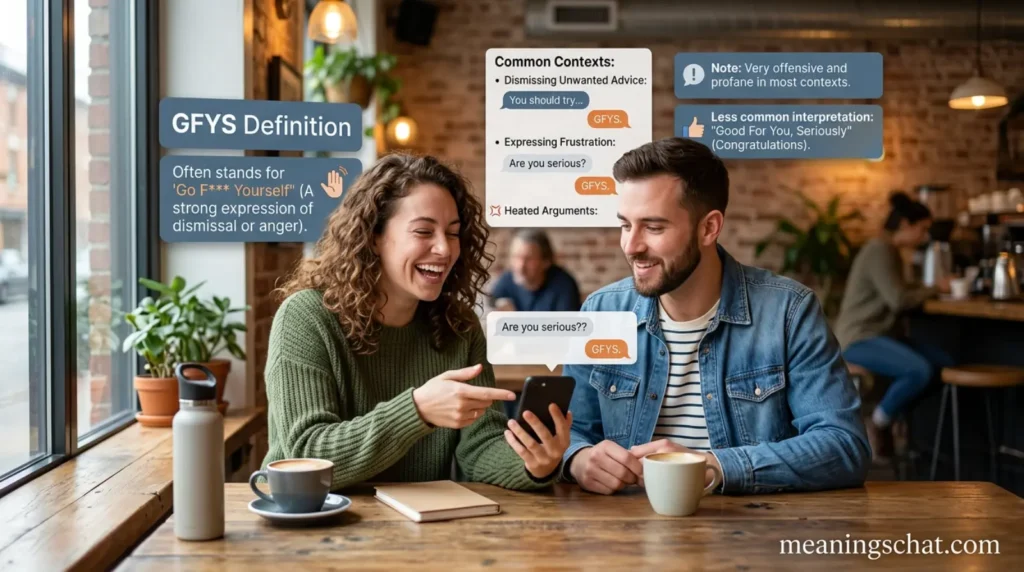
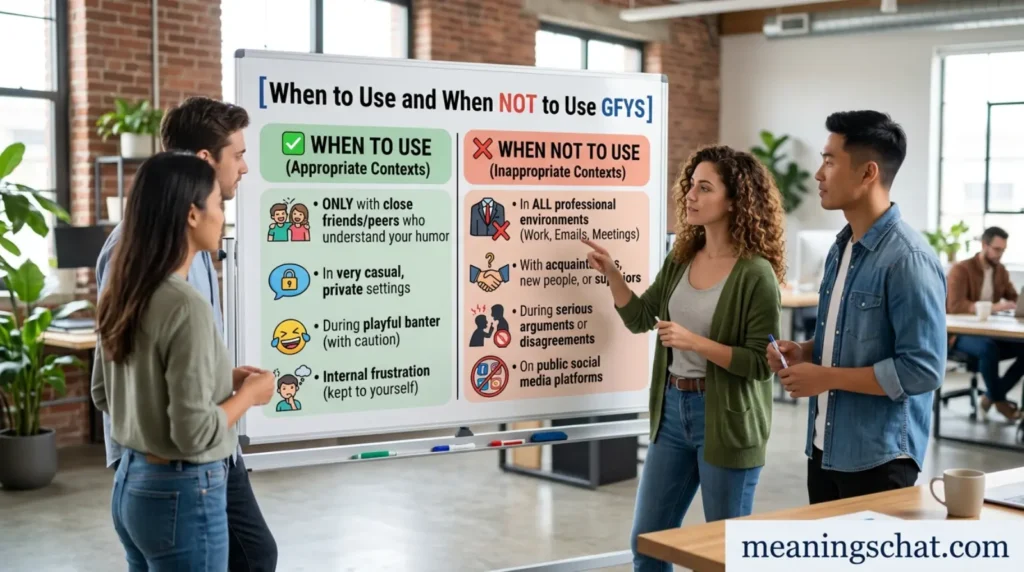
When to Use and When NOT to Use GFYS
Even though it is common online, it is very important to understand where it should NOT be used.
❌ Do NOT use GFYS in:
- School or college assignments
- Professional emails or workplace chats
- Conversations with teachers or elders
- Customer support or business communication
- Public posts where professionalism is important
Using it in these situations can:
- Damage your reputation
- Lead to warnings or bans online
- Offend people seriously
⚠️ Sometimes used in:
- Private chats between close friends
- Gaming chats during frustration
- Online arguments (not recommended)
Even in these cases, it is risky because tone can easily be misunderstood.
✔️ Better alternative approach:
Instead of using GFYS, people often choose:
- “I’m really upset right now”
- “Let’s not continue this conversation”
- “I disagree strongly”
These are safer and more respectful ways to express emotions.
Similar Slang Words or Alternatives
Here are some related slang terms you might also see online:
1. STFU
Means: “Shut The F*** Up”
👉 Used when someone wants another person to stop talking in anger.
2. GTFO
Means: “Get The F*** Out”
👉 Used to tell someone to leave or express disbelief.
3. IDC
Means: “I Don’t Care”
👉 Neutral expression showing disinterest.
4. SMH
Means: “Shaking My Head”
👉 Used to show disappointment or disbelief.
5. BRB
Means: “Be Right Back”
👉 Neutral and common in everyday chats.
Unlike GFYS, most of these are either neutral or less aggressive.
Is GFYS Rude?
Yes, GFYS is considered very rude and offensive in almost all contexts. It contains explicit language and is meant to insult someone strongly.
Even if used jokingly, it can:
- Hurt feelings
- Create misunderstandings
- Escalate conflicts
That is why it is best avoided in most conversations.
FAQs:
What does GFYS mean from a girl?
It has the same meaning: “Go F*** Yourself.” Gender does not change the meaning. It depends on the emotional context of the conversation.
Is GFYS slang rude?
Yes, it is highly rude and offensive. It is not considered polite communication.
Can GFYS be used in professional chats?
No. It is completely inappropriate for professional, academic, or workplace communication.
Does GFYS have a flirty meaning?
No, GFYS is not flirty. It is strictly an insult or expression of anger.
Is GFYS still used in 2025?
Yes, it is still used online, especially in gaming and social media arguments, but many platforms discourage or filter it.
Conclusion
The slang GFYS meaning in text stands for “Go F* Yourself”**, a strong and offensive expression used mainly during anger or arguments online. It is common in informal digital spaces like gaming chats and social media, but it is not suitable for respectful communication.
Understanding this slang helps you recognize tone and emotion in conversations, especially online. However, the best practice is to avoid using such aggressive language and choose calmer words when expressing frustration.

Jimmy Johan is a passionate writer at Meaningschat who specializes in explaining text slang, internet terms, and digital communication trends. He is known for his simple, engaging, and reader-friendly writing style that makes modern language easy to understand. Jimmy enjoys researching online culture, social media trends, and the evolving world of texting abbreviations. Through his content, he aims to help readers stay informed, connected, and confident in today’s digital conversations.