Contempt Meaning You’re scrolling through social media or reading a text conversation when someone says, “I have nothing but contempt for that behavior.”At first, you might wonder if contempt is a new slang word or an internet abbreviation. It sounds serious, but what does it actually mean?
The truth is that contempt is not modern internet slang. It is a common English word that people sometimes use in text messages, social media posts, online discussions, and everyday conversations. Understanding its meaning can help you avoid misunderstandings and communicate more clearly online and offline.
What Does Contempt Meaning in Text?
In text messages and online conversations, contempt means a strong feeling of dislike, disrespect, or lack of respect for someone or something.
When someone expresses contempt, they believe another person’s actions, ideas, or behavior are beneath respect or consideration. It is one of the strongest negative emotions someone can express.
Simple Definition
Contempt = Deep disrespect or strong dislike toward someone or something.
Unlike many internet abbreviations such as LOL or BRB, contempt is a regular English word. Its meaning stays almost the same across texting, social media, emails, books, and face-to-face conversations.
Can Contempt Have Multiple Meanings?
Yes. Depending on the situation, contempt may refer to:
- Strong disrespect for a person.
- Looking down on someone’s behavior.
- Disapproval of an action or decision.
- In legal settings, “contempt of court,” which means disobeying or disrespecting a court’s authority.
In casual texting, it almost always refers to strong disrespect or disgust.

What Does Contempt Mean Emotionally?
Contempt is stronger than simply disliking someone.
Here is how it compares:
- Annoyed means something bothers you.
- Angry means you feel upset.
- Hate means you strongly dislike someone.
- Contempt means you believe someone deserves little or no respect.
Because of this, contempt often sounds serious and emotional.
Where Is Contempt Used?
Although contempt is not internet slang, people frequently use it online.
Common places include:
Text Messages
Friends sometimes use contempt while discussing someone’s rude behavior.
Example:
“I have complete contempt for people who lie.”
People may use it in captions or comments about unfair situations or public figures.
Example:
“His actions deserve nothing but contempt.”
TikTok
Creators sometimes mention contempt while reacting to trending topics or controversial news.
X (Formerly Twitter)
People often express opinions using the word contempt when discussing politics, sports, celebrities, or current events.
Longer discussions about social issues or personal experiences may include the word.
Reddit users frequently use contempt while debating opinions or sharing personal stories.
Professional Writing
Unlike most internet slang, contempt is also common in:
- News articles
- Essays
- Books
- Legal documents
- Workplace discussions
Who Commonly Uses Contempt?
Unlike abbreviations that mainly teenagers use, contempt is understood by people of all ages.
It is commonly used by:
- Adults
- College students
- Writers
- Journalists
- Lawyers
- Teachers
- Professionals
- Social media users
Its use depends more on the topic than the age of the speaker.
Examples of Contempt in Conversation
Here are realistic examples showing how contempt appears naturally.
Example 1
Alex: Why don’t you trust him?
Emma: Because his lies make me feel nothing but contempt.
Example 2
Ryan: Did you watch the interview?
Lily: Yes, and his attitude showed complete contempt for everyone.
Example 3
Jake: Why are people criticizing that influencer?
Mia: Many viewers feel contempt for the way she treated others.
Example 4
Chris: Why did your teacher look upset?
Sarah: She said showing contempt toward classmates is unacceptable.
Example 5
Daniel: That comment section is wild.
Olivia: Some replies are filled with contempt instead of respect.
Example 6
Mark: Why did they stop supporting him?
Emma: His behavior earned people’s contempt.
Example 7
Sophie: That movie villain was terrifying.
Noah: Yes, he treated everyone with complete contempt.
Is Contempt Positive or Negative?
Contempt is almost always a negative emotion.
It suggests:
- Disrespect
- Disapproval
- Disgust
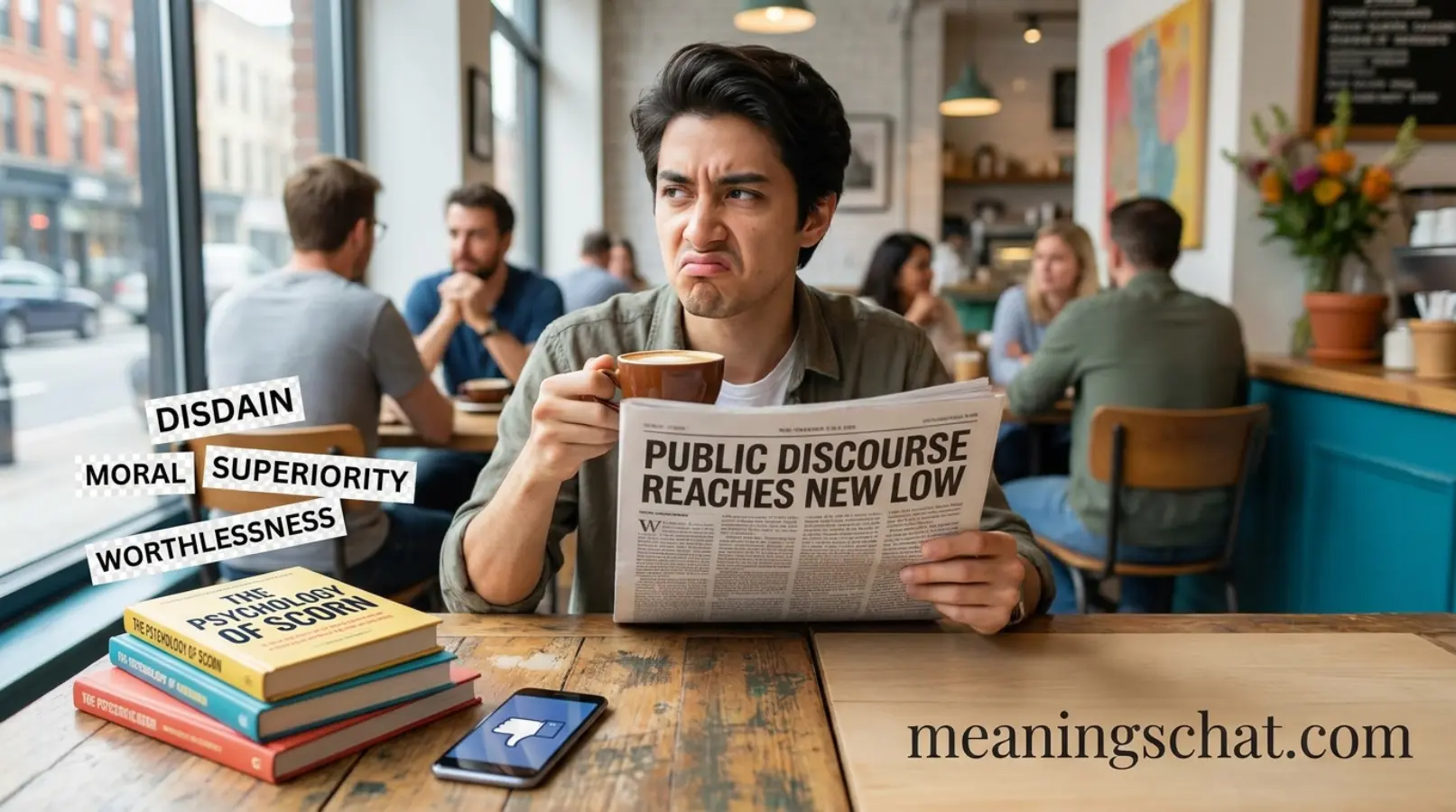
- Feeling morally superior
- Looking down on someone
It rarely has a positive meaning.
Is Contempt Rude?
Yes.
Using the word contempt often sounds harsh because it expresses a very strong opinion.
For example:
“I disagree with him.”
This sounds polite.
“I feel contempt for him.”
This sounds much stronger and more personal.
Because of its intensity, people should use it carefully.
Is Contempt Friendly?
Generally, no.
Friends rarely use contempt jokingly.
Instead, it usually appears during serious discussions about:
- Bad behavior
- Dishonesty
- Injustice
- Disrespect
- Poor decisions
Does Contempt Have a Flirty Meaning?
No.
Contempt has no romantic or flirty meaning.
In fact, expressing contempt usually damages relationships because it signals a lack of respect.
Relationship experts often describe contempt as one of the most harmful emotions in unhealthy relationships.
When to Use Contempt
The word works well when describing serious feelings.
Good situations include:
- Talking about dishonest behavior.
- Discussing unfair treatment.
- Writing essays.
- Sharing opinions respectfully.
- Describing emotional reactions.
- Commenting on social issues.
Example:
“I have contempt for bullying.”
This clearly expresses strong disapproval.
When Not to Use Contempt
Avoid using contempt when:
- Talking to someone professionally unless necessary.
- Making casual jokes.
- Trying to sound friendly.
- Speaking with customers.
- Writing polite business emails.
- Giving constructive criticism.
Instead, softer words like dislike, disagree, or disappointed may sound more appropriate.
Can You Use Contempt in Professional Chats?
Usually, no.
While contempt is a real English word, it sounds emotionally charged.
Instead of writing:
“I have contempt for this proposal.”
A professional alternative would be:
“I strongly disagree with this proposal.”
or
“I have concerns about this decision.”
These sound more respectful and productive.
Why Do People Use the Word Contempt?
People choose contempt because ordinary words sometimes fail to describe how strongly they feel.
Instead of saying:
“I don’t like his actions.”
They may say:
“I feel contempt for his actions.”
The second sentence shows much deeper emotion.
Similar Words and Alternatives
Here are some words related to contempt.
Disrespect
Showing little or no respect toward someone.
Disdain
Feeling that someone or something is unworthy of respect.
Scorn
Openly expressing strong dislike or disrespect.
Hatred
An intense feeling of dislike, though not always connected to disrespect.
Disapproval
Thinking something is wrong without expressing complete contempt.
Common Mistakes About Contempt
Many people misunderstand this word.
Mistake 1
Thinking contempt is internet slang.
It is actually a standard English vocabulary word.
Mistake 2
Using contempt when they simply mean disagreement.
Disagreement is much weaker than contempt.
Mistake 3
Using contempt in polite business conversations.
The word often sounds too emotional for professional settings.
Mistake 4
Assuming contempt means anger.
Anger and contempt are different emotions.
Someone may feel angry for a short time.
Contempt often involves lasting disrespect.
Contempt in Everyday Life
You may hear the word in many situations.
Examples include:
- News reports
- Movies
- TV dramas
- Political debates
- Relationship advice
- School discussions
- Court cases
- Social media posts
Because it is a common English word, learning its meaning improves both reading and communication skills.
Why Understanding Contempt Matters
Knowing this word helps you:
- Understand online conversations.
- Read books more easily.
- Follow news stories.
- Communicate more accurately.
- Avoid using overly harsh language.
- Recognize emotional tone in messages.
Strong vocabulary also makes your own writing clearer and more expressive.
FAQs
What does contempt mean from a girl?
It means she feels strong disrespect or deep disapproval toward someone or something. The meaning does not change based on gender.
Is contempt slang or rude?
Contempt is not slang. It is a standard English word that often sounds harsh because it expresses intense disrespect.
Can I use contempt in professional chats?
It is usually better to avoid it. Softer expressions like “I disagree” or “I have concerns” are more appropriate in workplace conversations.
Does contempt have any flirty meaning?
No. Contempt has no romantic or flirtatious meaning. It expresses disrespect rather than affection.
Is contempt still commonly used in 2025?
Yes. Contempt continues to appear in everyday conversations, social media, books, news articles, and professional writing.
Conclusion
The contempt meaning is simple but powerful. It refers to a strong feeling of disrespect, disapproval, or looking down on someone or something. Although people may encounter it in text messages or social media posts, it is not internet slang. Instead, it is a widely used English word that carries serious emotional weight.
If you see contempt in a chat, article, or online discussion, you’ll now understand exactly what the speaker is trying to express. Use it thoughtfully, especially in serious conversations, and choose softer alternatives when you want to keep your tone polite and professional.